The Logic of
Strategy
Why strategy is not planning, and what it actually is
The Grammar of Power
Sun Tzu and the Art of Not Fighting
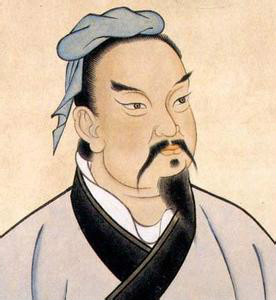
The oldest strategic text that remains genuinely useful is also the most counterintuitive. The Art of War, attributed to Sun Tzu and dated by most scholars to somewhere between the fifth and third centuries BC during the Warring States period of ancient China, opens with a claim that sounds paradoxical to Western ears shaped by the Clausewitzian tradition: the supreme art of war is to subdue the enemy without fighting.
This is not pacifism. Sun Tzu is not arguing that war should be avoided because it is wrong. He is arguing that it should be avoided because it is expensive, unpredictable, and leaves both victor and vanquished weaker than they were before. The commander who wins a hundred battles is not skilled. The commander who defeats the enemy without fighting is truly skilled. The distinction is between tactical success and strategic victory, and the two are not only different but frequently opposed.
The direct forces that engage the enemy, hold them in place, and create the conditions for contact. They constrain the adversary. Without them, indirect forces have no weight behind them.
The forces that deliver the decisive stroke, attacking where the enemy is not, exploiting the opening that direct engagement creates. Victory comes from their interaction with the orthodox.
The core analytical framework of The Art of War rests on this distinction between zhengbing and qibing: direct and indirect methods. Victory comes from the interaction of the two. An army of only direct forces is predictable and eventually exhausted. An army of only indirect forces has no weight behind it. The commander who can combine the two achieves what Sun Tzu calls shi: the strategic configuration of power, the moment when position, timing, and force combine to make the outcome inevitable before the decisive engagement has begun.
Sun Tzu's most important strategic insight is about information rather than force. Know the enemy and know yourself, and you will not be endangered in a hundred battles. Know yourself but not the enemy, and for every victory you will suffer a defeat. Know neither the enemy nor yourself, and you will succumb in every battle. The asymmetry here is revealing: self-knowledge is necessary but not sufficient. Deception is not a departure from strategy. It is one of its primary instruments.
The twenty-five centuries between Sun Tzu and the present have not made The Art of War obsolete. The specific weapons have changed. The specific terrain has changed. The structural logic has not.
The commander who wins a hundred battles is not skilled. The commander who defeats the enemy without fighting is truly skilled. Sun Tzu wrote this in the fifth century BC. Every military strategist since has been arguing with it.
Clausewitz and War as Politics
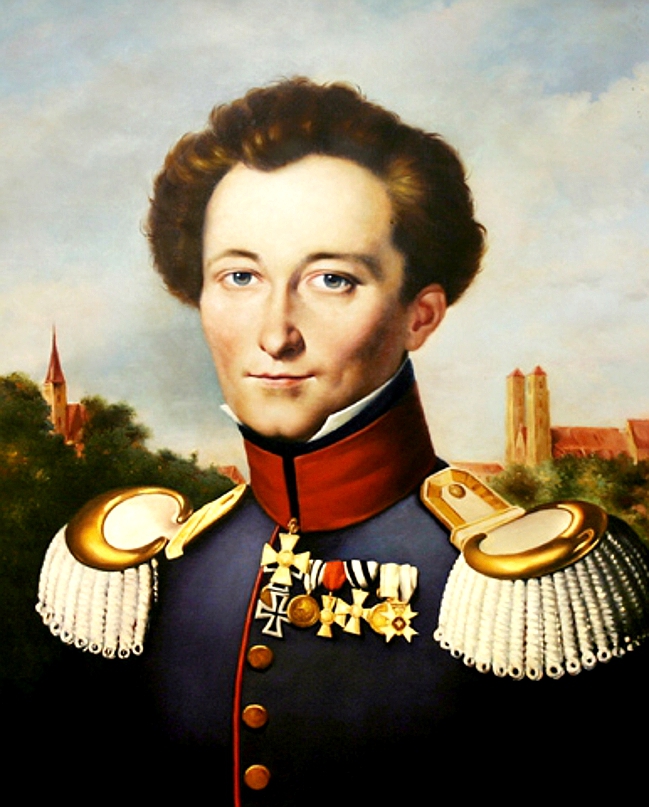
Carl von Clausewitz is the most consequential strategic thinker in the Western tradition, and his central claim is simultaneously the most important and the most frequently misquoted insight in the entire literature of strategy. War is not merely a political act, he writes in On War, the great unfinished masterwork composed between 1816 and his death in 1831 and published posthumously by his wife Marie von Clausewitz, but a true political instrument, a continuation of political activity by other means.
The claim is not that war is good or bad. It is a structural observation about what war is for. War does not exist in isolation from the political context that produces it. It is a continuation of that context by different means. The objectives of war are political objectives. The acceptable costs of war are determined by the political stakes involved. The point at which war should be terminated, even in the absence of complete military victory, is determined by whether continuing serves the political purpose for which the war was fought.
This single insight has been violated so consistently in modern military history that it is worth dwelling on. The American military in Vietnam achieved consistent tactical success against an adversary it could defeat in virtually every engagement. It lost the war. The reason is the one Clausewitz identified: the military instrument was being used in the service of political objectives that were either unachievable through military means or not clearly enough defined to give the military a coherent mission.
Clausewitz's second great contribution is the concept of friction. In theory, war seems simple enough. But war is not conducted against inert material. It is conducted against a living force that reacts, adapts, and creates conditions that the plan did not account for. Every plan begins to degrade from the moment of contact with reality. Orders are misunderstood. Units arrive late. Equipment fails. The weather changes. Intelligence is wrong. Subordinates make independent decisions that cascade through the system in unpredictable ways. All of these individually manageable difficulties accumulate into something Clausewitz calls friction: the force that makes the apparently easy so difficult.
The concept of friction is closely related to what Clausewitz calls the Fog of War: the irreducible uncertainty about conditions on the other side of the hill. Strategic planning cannot eliminate fog. It can only account for it. The commander who plans as if certainty is achievable will be destroyed by the uncertainty that is in fact constant.
The Gap Between Plan and Reality
The Prussian military theorist Helmuth von Moltke the Elder, who commanded the armies that defeated Austria in 1866 and France in 1870 and who was one of the most successful practitioners of strategy in the nineteenth century, is the source of the most useful single observation about strategic planning ever made. No plan, he wrote, survives first contact with the enemy.
This observation is often taken as a counsel of despair about planning. Von Moltke intended the opposite. His argument was that the purpose of planning is not to produce a plan that survives contact with reality. The purpose of planning is to produce commanders who understand the situation well enough to adapt intelligently when, inevitably, the plan does not survive. The plan is the instrument of that understanding. It is not the thing itself.
The concept Von Moltke championed within the German military tradition is Auftragstaktik, mission tactics: the doctrine by which subordinates are given the objective and the constraints and are then trusted to find their own way to the objective rather than being given detailed instructions that will be overtaken by events before they can be executed. Auftragstaktik is the institutional solution to the friction problem. It does not eliminate the gap between plan and reality. It builds an organisation that can close that gap through decentralised adaptation rather than requiring every deviation from plan to be referred back up the chain of command.
This is the insight that John Boyd later formalised into the OODA loop: the Observe-Orient-Decide-Act cycle that describes the basic rhythm of strategic interaction. The actor that can cycle through the loop faster than the adversary disrupts the adversary's orientation and decision-making while executing its own action. Speed of adaptation is a force multiplier that operates independently of raw capability.
Every plan degrades from the moment of contact with reality. The strategic response to friction is not better planning. It is the development of organisations and decision-making frameworks that can adapt faster than the adversary when the plan inevitably fails. The organisation that adapts faster wins regardless of which side's initial plan was more elegant.
Sun Tzu and Clausewitz in Tension
Sun Tzu and Clausewitz are usually taught as complementary authorities. They are also in genuine tension, and the tension reveals something important about the nature of strategy itself.
Sun Tzu's strategic ideal is the victory achieved without battle. Position the forces correctly, create the conditions, and the outcome becomes inevitable before the fighting begins. The battle, when it occurs, is merely the confirmation of what was already decided at the strategic level. This is a strategy of patience, of manoeuvre, of shaping the environment over time such that the adversary's defeat is a foregone conclusion before the adversary has recognised it.
Clausewitz's strategic ideal is the battle of annihilation, the Vernichtungsschlacht: the engagement in which the enemy's armed force is destroyed so completely that it can no longer resist. The political objective is achieved through the military destruction of the adversary's capacity to resist. This is a strategy of direct confrontation, of bringing maximum force to bear at the decisive point, of winning through superior application of violence at the moment of contact.
The resolution of the tension depends on the specific situation, on the relative capabilities of the parties, on the time horizon available, and on the political context within which the conflict is occurring. The contemporary relevance is immediate. Chinese strategic culture, deeply shaped by the Sun Tzu tradition, has consistently favoured the indirect approach: the long game of economic development, institutional positioning, and infrastructure investment that creates the conditions for dominance before any decisive confrontation occurs. American strategic culture, shaped by the memory of the Second World War and the institutional legacy of the Pentagon, has consistently favoured the direct approach.
The strategic competition between these two traditions is not just a competition between states. It is a competition between two fundamentally different conceptions of what strategy is and how it works.
Sun Tzu shapes the environment until victory is inevitable. Clausewitz destroys the enemy's capacity to resist. The strategic competition between these two traditions is still being conducted.
The Levels of War
Military strategists distinguish three levels at which conflict operates simultaneously, and the failure to distinguish between them is one of the most common sources of strategic error. The levels are tactical, operational, and strategic, and each has its own logic, its own timeframe, and its own criteria for success.
The levels interact in ways that can create paradoxes. Tactical success can undermine operational objectives. Operational success can undermine strategic objectives. The village that is destroyed to deny it to the enemy may generate the political backlash that undermines the entire campaign. The army that wins every battle may lose the war by the political costs that its victories generate. Clausewitz's insight that war is the continuation of politics by other means cuts in both directions: politics shapes what military means can be used and for what purposes, and the use of military means creates political effects that feed back into the political context.
Strategy Beyond the Military
The most important insight in the entire tradition of strategic thinking is one that neither Sun Tzu nor Clausewitz fully articulated because neither needed to: strategy is not a military concept. It is a concept that applies to any situation in which actors with conflicting interests interact under conditions of uncertainty, with incomplete information, and with the capacity to affect each other's outcomes.
The British strategist Lawrence Freedman, in his monumental 2013 work Strategy: A History, traces the concept from its origins in military thought through its application to business, political campaigning, social movements, and personal life, and arrives at a conclusion that is both obvious and unsettling: strategic thinking is the most widely applicable intellectual skill in the entire range of human activities, and it is almost nowhere systematically taught.
The commercial strategist Michael Porter, in Competitive Strategy published in 1980, imported the analytical frameworks of military strategy into the domain of business competition. Porter's five forces are a translation of the military concept of the strategic environment into the commercial domain. Knowing your competitive environment is the commercial equivalent of knowing your enemy.
The political scientist Thomas Schelling, in The Strategy of Conflict published in 1960, demonstrated that the game-theoretic analysis of strategic interaction applied not only to military confrontation but to every situation in which actors with partially conflicting interests must make interdependent choices. Schelling's analysis of credible commitment, of the role of communication in strategic interaction, and of the dynamics of escalation and de-escalation has shaped both nuclear strategy and the academic discipline of international relations more than any other single work. The logic of the strategic environment is the same whether the actors are states with nuclear arsenals or negotiators in a commercial dispute.
Why Strategy Is Not Planning
The confusion between strategy and planning is so widespread and so consequential that it deserves its own treatment. Planning is the determination of the sequence of actions required to achieve a defined objective in a predictable environment. Strategy is the management of action and interaction in an environment that is neither predictable nor controllable. Planning is what you do when you control all the relevant variables. Strategy is what you do when you do not.
The difference has concrete implications. A plan can be right or wrong. A strategy can only be better or worse adapted to an environment that is itself changing in response to the strategy. The planner asks: what is the most efficient path to the objective? The strategist asks: what is the most robust approach to an objective that may itself change as conditions change, against an adversary who is actively trying to defeat me, in an environment I cannot fully observe or predict?
Roger Martin, in his work with A.G. Lafley on Playing to Win, argues that most of what organisations call strategy is in fact planning disguised as strategy. Real strategy requires making choices that cannot be reversed without significant cost, choices about where to play and how to win that necessarily foreclose other options. If every option remains open, no strategic choice has been made.
The German concept of Strategie in the tradition of Clausewitz and Von Moltke captures this distinction precisely. Strategy is the use of engagements for the purpose of the war. The strategy does not specify the engagements in advance. It specifies the purpose that the engagements must serve. The strategy is the thread of purpose that runs through the specific decisions without prescribing them. When that thread is present, tactical actions accumulate toward strategic outcomes. When it is absent, tactical actions, however successful individually, do not add up to anything.
The willingness to be wrong, to commit to a direction knowing that the commitment cannot be easily undone, is what distinguishes strategic thinking from sophisticated planning. If every option remains open, no strategic choice has been made.
The Grammar Extends
The first artifact of this curriculum established three rules of the grammar of power. The logic of strategy adds the rules that govern how power is actually applied in conditions of conflict and competition.
Strategy exists because of the adversary. Remove the adversary and you have logistics, or engineering, or planning. The presence of an adversary who can react, adapt, and counter is what makes strategy necessary. Every strategic calculation must model the adversary's response to the strategy, not just the environment in which the strategy operates.
The levels of analysis must be kept separate. Tactical success does not automatically produce operational success. Operational success does not automatically produce strategic success. Strategic success does not automatically produce political success. The chain of connection between each level must be consciously maintained, and the temptation to substitute success at a lower level for success at a higher level must be consciously resisted.
The political dimension is always primary. Every strategic action creates political effects. Those political effects feed back into the strategic environment. The actor who ignores this feedback loop, who treats the strategic and political dimensions as separable, is making the error that has destroyed more campaigns, more states, and more organisations than any tactical defeat in the historical record.
Sun Tzu and Clausewitz: Two Strategic Profiles
The two foundational traditions in strategic thought are not mutually exclusive. The most effective strategic practice draws on both. But their structural profiles are genuinely different, and confusing them produces strategic error in both directions.
The two traditions are not mutually exclusive. The most effective strategic practice uses the Sun Tzu framework to shape the strategic environment and the Clausewitz framework to deliver decisive action when the moment is right. The confusion of the two, treating Sun Tzu's patience as weakness or Clausewitz's directness as brute force, produces strategic error in both directions.