Ibn Khaldun, Turchin
and the Cycle of
Civilisations
The two thinkers, separated by six centuries, who formalised the grammar of historical recurrence
The Grammar of Power
The Man and His Context
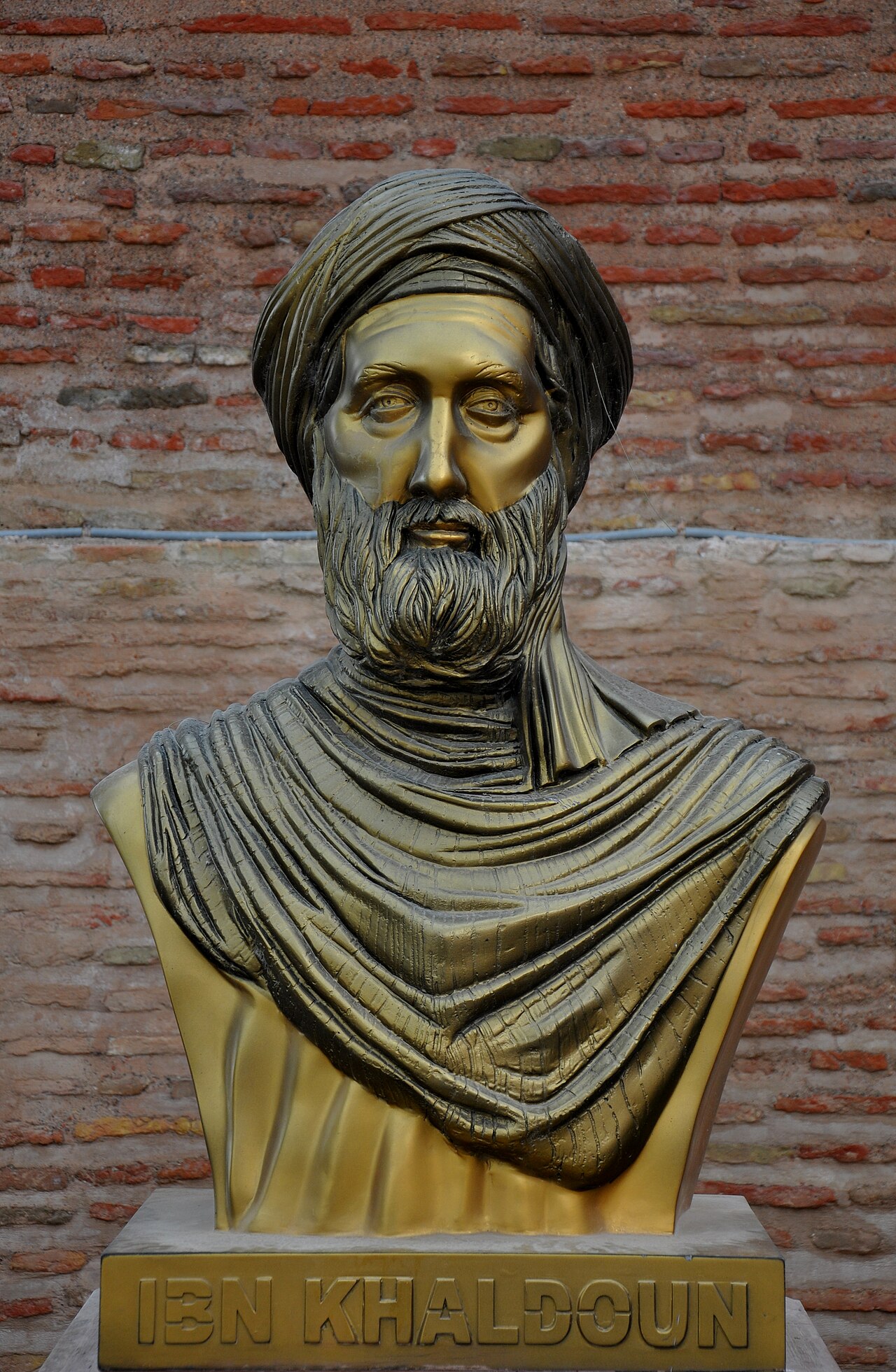
To understand Ibn Khaldun's achievement, it is necessary to understand the world he was observing. He was born into a distinguished Arab family that had fled the fall of Seville to the Reconquista two generations before his birth and settled in Tunis under the Hafsid dynasty. He lived through the Black Death, which killed roughly a third of the population of North Africa during his childhood. He served as a court official, diplomat, and political advisor to no fewer than seven different rulers across North Africa and Andalusia, was imprisoned, exiled, and restored to favour multiple times, watched the dynasties he served rise and collapse with a regularity that a less observant man might have found merely depressing but that Ibn Khaldun found analytically illuminating.
He met Timur, the conqueror known in the West as Tamerlane, outside the walls of Damascus in 1401, five years before his own death, and the two men held a series of remarkable conversations about the nature of power, the history of the Mongol conquests, and the condition of the world. The account Ibn Khaldun left of these conversations is one of the extraordinary documents of medieval intellectual history: two of the most formidable minds of the fourteenth century, one a world-conqueror and one a world-analyst, examining the mechanics of power together across a negotiating table outside the walls of a besieged city.
The product of Ibn Khaldun's observation, reflection, and analytical intelligence was The Muqaddimah, the prolegomenon to his projected universal history, written in extraordinary circumstances in 1377 in a single continuous burst of composition lasting approximately five months while he was living in a remote castle in what is now Algeria, having withdrawn from the court politics that had consumed much of his earlier life. The Muqaddimah contains the first systematic theory of historical sociology, the first serious analysis of the economics of taxation, a sophisticated theory of knowledge and the conditions of its production, and, at its core, the most powerful cyclical theory of history ever written before the modern era.
Court official, diplomat, and political advisor to seven rulers across North Africa and Andalusia. Wrote The Muqaddimah in a single five-month burst in 1377. The first systematic theory of historical sociology. The first serious analysis of the non-linear relationship between taxation and revenue. The most powerful cyclical theory of history written before the modern era.
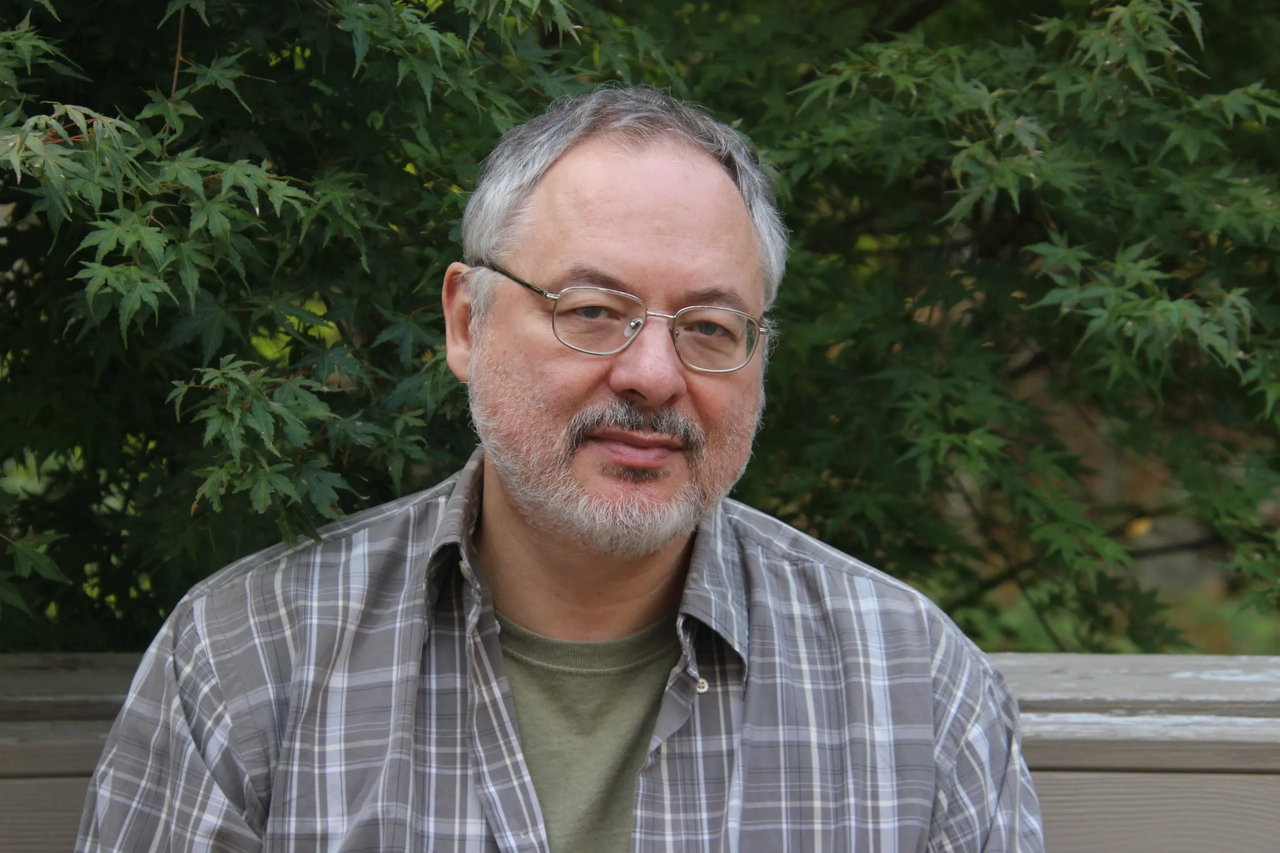
Trained as an ecologist working on animal population dynamics. Founder of cliodynamics, the mathematical modelling of historical processes. Applied the mathematical tools of nonlinear dynamical systems to two millennia of historical data. In 2010, predicted that the United States would experience a peak of political instability around 2020.
Asabiyyah as the Engine of History
The central concept in Ibn Khaldun's system is asabiyyah, a word that has no exact English equivalent and has been translated variously as group feeling, group solidarity, social cohesion, tribal spirit, and esprit de corps. None of these translations is wrong. None of them is complete. Asabiyyah is the quality of intense social bonding within a group that makes its members willing to act for each other's benefit, sacrifice for the collective good, and fight together with a cohesion and commitment that individually advantaged but socially fragmented groups cannot match.
Ibn Khaldun does not treat asabiyyah as a psychological phenomenon that some groups happen to have and others happen to lack by virtue of their individual character. He treats it as a sociological phenomenon with specific structural causes. Groups that live under conditions of material hardship, mutual dependence, and shared adversity develop high asabiyyah. Groups that live under conditions of material abundance, individual advantage, and social ease develop low asabiyyah. The relationship between material conditions and social cohesion is systematic rather than contingent.
The structural argument runs as follows. Desert and marginal peoples, nomadic tribes and frontier populations, live under conditions that produce high asabiyyah. They are materially poor but socially cohesive, militarily capable because their fighting quality derives from genuine solidarity rather than the compulsion of an administrative apparatus. Settled urban civilisations, by contrast, produce the conditions that destroy asabiyyah: wealth, luxury, division of labour, the replacement of personal loyalty by contractual and administrative relationships, the substitution of mercenary forces for citizen soldiers. Urban civilisations are materially rich and socially fragmented. Their military power depends on hired professionals who fight for pay rather than solidarity.
The collision between high-asabiyyah peripheral groups and low-asabiyyah settled civilisations is the engine of political history. The peripheral group conquers. But here is the crucial dynamic that Ibn Khaldun identifies with extraordinary precision: once the conquering group establishes itself as the new ruling dynasty, the very conditions that produced its asabiyyah begin to dissolve. The conquering nomads settle. They acquire wealth and its attendant pleasures. The harshness of desert life that produced their solidarity gives way to the ease of urban life that destroys it. The sons of the conquerors are less cohesive than the conquerors. The grandsons are less cohesive than the sons.
The sons of conquerors do not choose to become soft. The structural conditions of their lives make them so. The fundamental claim of Ibn Khaldun's system is that political history is shaped by forces more powerful than individual will, forces that operate systematically according to discoverable rules.
Ibn Khaldun is precise about the timescale. He argues that the typical dynasty lasts approximately three to four generations, roughly a hundred to a hundred and twenty years, before its asabiyyah has decayed sufficiently to make it vulnerable to replacement by a peripheral group with higher social cohesion. The cycle is not inevitable in any particular case. But the underlying dynamic is structural rather than contingent, driven by the relationship between material conditions and social cohesion that operates regardless of the intentions or character of the individuals involved.
The curve that modern economists call the Laffer Curve was described with analytical precision by Ibn Khaldun in 1377, six hundred years before it entered the vocabulary of supply-side economics.
The Muqaddimah as Social Science
The Muqaddimah does not confine itself to the asabiyyah cycle. It is, in its full scope, the first serious attempt at a social science, written six centuries before the modern social sciences were institutionalised in European universities. Its range is extraordinary and its methods are, at least in aspiration, empirical rather than scriptural or philosophical.
Ibn Khaldun's theory of the state is structural rather than normative. He is not arguing about what the ideal state should look like. He is arguing about what states actually do, what functions they perform, and what dynamics govern their rise and fall. The state, on his account, is an organisation for extracting surplus from productive populations in order to fund the military and administrative apparatus that maintains order. This is not a moral claim. It is a functional description. The question is not whether the state should extract surplus but what level of extraction is compatible with the continued productivity of the surplus-generating population.
Here Ibn Khaldun arrives at one of the most sophisticated observations in the entire Muqaddimah: the relationship between taxation and revenue is non-linear. Light taxation in the early stages of a dynasty, when the ruling group still has high asabiyyah and does not yet require an expensive administrative and military apparatus, produces high revenue because it leaves productive capacity intact and encourages economic activity. Heavy taxation in the later stages of a dynasty, when declining asabiyyah has forced the ruling group to rely on expensive mercenaries and an elaborate bureaucracy, destroys the productive base it is designed to extract from, eventually producing declining revenue despite increasing rates. The curve that modern economists call the Laffer Curve was described with analytical precision by Ibn Khaldun in 1377, six hundred years before it entered the vocabulary of supply-side economics.
Ibn Khaldun's analysis of economic geography is equally sophisticated. He recognises the division of labour as the foundation of urban prosperity, anticipating Adam Smith by four centuries. He understands that cities produce increasing returns, that the concentration of population and specialisation in cities generates productivity gains that dispersed rural populations cannot achieve. He understands that long-distance trade is not a luxury but a structural requirement of complex urban economies. And he identifies the specific ways in which historians systematically distort the past: the tendency to attribute causation to individuals rather than structural forces, the tendency to project the conditions of the present onto the past, the tendency to record only dramatic events while ignoring the slow structural changes that made those events possible.
The Three-Generation Decay Cycle in Detail
The three-to-four generation decay cycle that Ibn Khaldun describes is worth examining in detail, because its specific mechanism illuminates not just medieval dynastic politics but any process of organisational decline driven by the loss of the conditions that produced original success.
The conquerors, the builders. They remember where they came from. Their needs are modest, their administrative apparatus small. Military power is genuine, rooted in solidarity rather than compulsion. Political authority rests on the respect generated by actual achievement. Asabiyyah at its peak.
Grew up hearing stories of the founding struggles but did not experience them. More educated, more sophisticated, more comfortable. They begin to rely on hired professionals. The administrative apparatus starts to expand. Taxation begins to rise. The first signs of factional competition within the ruling group appear.
Grew up entirely in luxury, entirely within the apparatus that earlier generations built, with no personal experience of the conditions that produced the dynasty's original power. Military power is entirely mercenary. Economic arrangements are extractive rather than productive. Political authority rests on inherited legitimacy, not demonstrated capacity.
The asabiyyah of the founding group is almost entirely dissipated. The ruling dynasty is now little more than a name attached to an expensive and inefficient administrative apparatus extracting from a declining economic base. Maintained by inertia and habit. A peripheral group with high asabiyyah now faces a centre with none. The collapse, when it comes, is rapid.
Ibn Khaldun is careful not to present this as a mechanical inevitability. Exceptional individuals can partially offset the structural decline. Specific historical contingencies can accelerate or delay the cycle. But the underlying dynamic is resistant to individual intervention because it operates through the aggregate behaviour of social groups rather than through the decisions of specific leaders. No individual ruler can restore the asabiyyah of a group that has been living in luxury for three generations by announcing that it is important.
This is, at civilisational scale, the same principle that Keltner's experimental work established at the individual level: the position shapes the behaviour, not the individual character of the person in the position. The sons of conquerors do not choose to become soft. The structural conditions of their lives make them so.
Peter Turchin and the Mathematisation of History
Peter Turchin came to the study of history by an unusual route. He was trained as a biologist, specifically as an ecologist, working on the mathematical modelling of animal population dynamics: the oscillations of lynx and snowshoe hare populations in the boreal forest, the boom-and-bust cycles of forest insect outbreaks, the mathematical conditions under which predator-prey systems produce stable cycles versus chaotic fluctuation. In the 1990s, looking for a new domain of application for the mathematical tools he had developed, he turned to human history and discovered that the same mathematical structures that described ecological cycles appeared, with striking fidelity, in the historical data on political violence, state collapse, and demographic fluctuation across two millennia of recorded history.
This convergence was not a metaphor. Turchin was not saying that history is like ecology. He was saying that the mathematical structures underlying the dynamics are the same, because the causal mechanisms that produce oscillation in ecological systems, the interaction between predator and prey, between consumer and resource, between population and productive capacity, have direct structural analogues in the social dynamics that Ibn Khaldun had described six centuries earlier.
The discipline Turchin established, which he named cliodynamics after Clio, the Muse of history, is the mathematical modelling of historical processes using the tools of dynamical systems theory. It is controversial within the historical profession, which has generally been hostile to quantitative and mathematical approaches to historical analysis. Turchin's response to these objections is both methodological and empirical: the objections apply to deterministic prediction of specific events, which he does not claim to offer. What his models do offer is the identification of structural forces that raise or lower the probability of instability, that make certain kinds of political crisis more or less likely across specific intervals of time. The models produce ranges and tendencies, not certainties.
The convergence between Ibn Khaldun and Turchin, across six centuries of independent development in completely different cultural and intellectual traditions, is itself one of the most striking pieces of evidence that both thinkers are pointing at something real in the structure of historical dynamics.
The Secular Cycle in Detail
Turchin's secular cycle, developed in the book of that name co-authored with Sergei Nefedov and published in 2009, is the mathematical formalisation of a dynamic that Ibn Khaldun had described qualitatively. The secular cycle operates over approximately two to three centuries and is driven by the interaction between population growth, economic productivity, real wages, and elite competition for the surplus that the economy generates.
The cycle begins in what Turchin calls the integrative phase: the period following the resolution of a previous crisis, when population is below the carrying capacity of the land, real wages are relatively high, the state is relatively solvent, and the ruling elite is relatively cohesive. The conditions are favourable for economic growth and political stability. Population grows. The economy expands. Living standards improve. The state accumulates fiscal capacity. This phase can last a century or more.
But population growth eventually presses against the productive capacity of the existing economic system. Real wages begin to fall as the supply of labour exceeds the demand for it. The surplus that had been broadly distributed begins to concentrate at the top of the social hierarchy, because falling wages mean that the returns to land and capital increase while the returns to labour decrease. The elite, which owns the land and capital, grows richer. The mass of the population grows poorer in relative terms, and eventually in absolute terms. This is the beginning of what Turchin calls the disintegrative phase.
Here a second dynamic enters that makes the analysis more complex and more interesting than a simple Malthusian model. As elite wealth increases, so does the number of people who consider themselves to belong to or aspire to the elite. The number of people competing for positions of high status, political power, and economic privilege grows faster than the number of such positions available. Turchin calls this phenomenon elite overproduction, and he argues that it is the primary driver of the political instability that characterises the disintegrative phase of the secular cycle.
Elite overproduction produces a specific and characteristic dynamic. The frustrated aspirants to elite status become what Turchin calls counter-elites: political entrepreneurs who mobilise popular grievance against the established order in order to disrupt the institutions that block their own advancement. They fund populist movements, articulate grievances that the established elite dismisses, and exploit the institutional weaknesses that the fiscal crisis of the state has created. Their motivations are not primarily altruistic. They are primarily self-interested. But the political instability they produce is real and structurally predictable regardless of the specific individuals involved.
Elite overproduction does not require elites to be malicious. It requires only that there are more people with the education, ambition, and connections to expect elite positions than there are elite positions available. The arithmetic does the rest. Frustrated elite aspirants have strong incentives to undermine the institutional order that blocks their advancement. This produces political instability that is structurally predictable from the inequality and credential metrics decades in advance.
The correlation between the structural preconditions index and subsequent political instability is not coincidental. It reflects the mechanism that both Ibn Khaldun and Turchin identified: the compression of wages and expansion of elite competition that characterises the disintegrative phase produces the conditions for political crisis regardless of the specific institutional form or cultural context. The United States in the 2010s was not experiencing an anomaly. It was experiencing the structural dynamics that every previous case in the dataset had exhibited at the corresponding phase of the secular cycle.
Elite overproduction does not require elites to be malicious. It requires only that there are more people with the education, ambition, and connections to expect elite positions than there are elite positions available. The arithmetic does the rest.
The Father-Son Cycle
Alongside the secular cycle, Turchin identifies a shorter oscillation operating over approximately fifty years, driven by a different mechanism. He calls this the father-son cycle, or the inter-generational cycle of political violence.
The mechanism is straightforward. During a period of high political instability and violence, a generation grows up with direct experience of the costs of political conflict: economic disruption, personal danger, the deaths of family members and community members in political violence. This generation, when it comes to political maturity, has a strong aversion to political conflict and strong incentives to maintain the institutions and norms that prevent its recurrence. The result is a period of relative political stability in the generation following the crisis.
But the generation that grows up in the stable period following the crisis has no personal experience of the costs of the instability that preceded it. They inherit stable institutions without understanding what those institutions were built to prevent. They become less willing to make the costly compromises that maintain political stability, less tolerant of the frustration of their immediate interests in the service of long-term institutional health. The result is rising political tension and, eventually, the recurrence of political instability that the previous generation's experience had temporarily suppressed.
The father-son cycle does not operate independently of the secular cycle. It is nested within it. During the integrative phase of the secular cycle, father-son oscillations are damped: the underlying structural conditions are favourable enough that even generations without direct experience of crisis manage the political system adequately. During the disintegrative phase, the father-son cycle amplifies: the structural pressures are severe enough that the institutional memory of the previous generation's aversion to conflict is insufficient to prevent its recurrence, and each crisis generation is followed by a generation that restores stability for a time before the structural pressures reassert themselves.
The 2010 Prediction and Its Reception
In an article published in the journal Nature in 2010, Turchin made a specific and falsifiable prediction about the future of American political stability. His model, applied to American historical data from the founding of the Republic through the early twenty-first century, showed the United States entering the disintegrative phase of its secular cycle, with the structural indicators of rising elite overproduction, declining real wages, increasing fiscal stress, and fragmenting institutional norms all present and trending in the direction of increasing instability. His prediction: the period around 2020 would see a significant peak in political instability in the United States.
The prediction was made in 2010. The events of the decade that followed, the increasing polarisation of American political life, the breakdown of institutional norms across both major parties, the fiscal deterioration, the rise of populist movements on both left and right, and the specific political crisis of the years surrounding 2020, occurred with a specificity and timing that was at least consistent with Turchin's prediction, though the appropriate methodological caution is that consistency with a prediction is not the same as validation of the model.
Turchin himself was careful about what he was claiming. He was not predicting a civil war in 2020. He was predicting a period of elevated political instability, driven by the structural forces that his model identified. The model does not specify the form that instability takes. It identifies the structural preconditions for instability. Whether those preconditions produce a specific constitutional crisis or a more diffuse erosion of institutional function is not something the model determines. The form is contingent. The structural pressure is structural.
The reception of Turchin's work has been divided along predictable lines. Historians committed to the irreducible particularity of historical events have been sceptical. Complexity scientists and ecologists have been more receptive, recognising the mathematical structures as familiar from the analysis of ecological systems. The question is not whether Turchin's models are perfect. It is whether they identify real structural dynamics that operate beneath the surface of specific events.
The Mechanism of Asabiyyah Decay in the Modern State
Ibn Khaldun's concept of asabiyyah applies beyond the dynastic politics of medieval North Africa and the Middle East. The mechanism he identifies, the decay of social cohesion under conditions of material success, operates in any organisation or political community that achieves success and then must maintain it across generations without the conditions that originally produced the cohesion.
The application to modern democratic states is not merely metaphorical. The founding generations of modern democratic republics had something like Ibn Khaldun's high asabiyyah: a shared experience of struggle, a common adversary, a vivid sense of what the alternative to their project looked like. The second generation inherited the institutions without the founding struggle. The third generation inherited the prosperity without the institutions' original precariousness. By the time Ibn Khaldun's fourth generation arrives, the institutions are treated as natural features of the landscape rather than as hard-won achievements that require active maintenance.
Turchin's secular cycle provides the quantitative complement to this qualitative observation. The structural forces that drive the disintegrative phase, declining real wages, elite overproduction, fiscal stress, and institutional fragmentation, are the same forces that erode asabiyyah at the macro level. They do so through specific mechanisms: declining wages increase inter-group competition and reduce the social trust that voluntary cooperation requires; elite overproduction creates a class of people with strong incentives to undermine the institutional order that blocks their advancement; fiscal stress reduces the state's capacity to provide the public goods that sustain the social contract; institutional fragmentation removes the shared normative framework within which political competition remains legitimate rather than existential.
The convergence of these mechanisms in the contemporary period is the reason that Turchin's model, Ibn Khaldun's framework, and the empirical data on declining social trust, increasing political polarisation, and institutional delegitimisation in multiple advanced democracies all point in the same direction at the same time.
The state that appears powerful today is inheriting the asabiyyah of previous generations and spending it down. The group that appears weak today may be accumulating the social cohesion that will make it powerful in a generation.
What the Cycle Reveals and What It Does Not
The historical cycle described by Ibn Khaldun and formalised by Turchin is one of the most powerful analytical tools available for understanding the structural dynamics of political history. It is not, however, a deterministic machine. Understanding what it does and does not claim is essential to using it correctly.
What the cycle does reveal is that the structural forces driving political instability are not primarily the product of individual failures, bad leadership, or cultural pathologies. They are the product of dynamics that operate regardless of the intentions and character of the individuals involved. The erosion of social cohesion under conditions of prolonged material success is not a character failure of the people experiencing it. It is a structural consequence of the conditions they inhabit. The fiscal crisis of the mature state is not primarily a consequence of bad governance. It is a structural consequence of the interaction between rising elite political power and declining real wages for the majority.
What the cycle does not reveal is the specific form that instability will take, the specific individuals who will be its agents, or the specific institutional arrangements that will emerge from the disintegrative phase. These are genuinely contingent matters. Turchin's model predicts the structural pressure, not the specific event. Ibn Khaldun's framework identifies the dynamic, not the specific dynasty that will replace the declining one.
What the cycle does not do, despite what some of its more enthusiastic popularisers have suggested, is mandate a specific political response. The identification of structural pressures that tend toward instability does not determine what kind of institutional engineering is most likely to manage those pressures successfully. That is a question that requires the combination of structural analysis, specific institutional knowledge, and the practical wisdom that cannot be derived from any general framework alone.
The deeper point is that the cycle reveals power as something that exists in time rather than simply in space. The grammar of power is not only about who holds power in the present moment. It is about the structural dynamics that determine how long any given distribution of power can be maintained and what will replace it when it cannot.
Ibn Khaldun's Specific Cases and the Evidence Base
Ibn Khaldun did not develop his framework in the abstract. He developed it from the observation of specific historical cases drawn from the history of the Arab world, the Berber dynasties of North Africa, the Persian empires, and the wider Islamic world.
The Almoravid dynasty of North Africa and Andalusia is one of Ibn Khaldun's central cases. The Almoravids arose in the mid-eleventh century from the Sanhaja Berber confederation of the western Sahara, a nomadic group whose austerity, religious intensity, and mutual solidarity gave them precisely the high asabiyyah that Ibn Khaldun's framework predicts will produce successful conquest. They conquered Morocco, then crossed the Strait of Gibraltar to halt the Reconquista and bring Andalusia under their control. Within a century, the dynasty's cohesion had dissipated. Their successors, raised in the luxury of Marrakech and Seville, had lost the desert austerity of the founding generation. They were replaced by the Almohads, another Berber movement from the Atlas Mountains with precisely the combination of religious intensity and social cohesion that Ibn Khaldun's framework predicts will replace a dynasty that has exhausted its asabiyyah.
The pattern repeats in Ibn Khaldun's account of the Abbasid Caliphate, the Fatimid dynasty of Egypt, the Zirids of North Africa, and the Hafsids under whom Ibn Khaldun himself was born. Each follows the same structural sequence: peripheral origin with high asabiyyah, successful conquest, material consolidation, generational dissipation, vulnerability to replacement. The specific mechanisms differ. The timing varies. The structural dynamic repeats with a consistency that Ibn Khaldun found remarkable.
Turchin's evidence base is both broader and more quantitative. His primary dataset for the analysis of American political instability is a database of political violence events, legislative gridlock measures, and inequality indicators spanning from the founding of the Republic to the early twenty-first century. The pattern that emerges across all of these very different societies is striking: the correlation between the structural indicators of the disintegrative phase and the subsequent occurrence of political instability is robust across cultures, centuries, and institutional forms. It is not a theory derived from a single culture's experience and applied to others by dubious analogy. It is a pattern that appears independently in societies that never knew each other existed, driven by a mechanism that operates independently of the specific cultural and institutional forms through which it expresses itself.
This cross-civilisational robustness is the framework's most important evidential property. Ibn Khaldun watched seven dynasties rise and fall in the course of a single life. What he saw was not chaos. It was a pattern. The pattern was the same each time.
The Grammar Extends
The historical cycle adds a temporal dimension to the grammar of power that the previous three artifacts could not supply. Power is not only about who holds it and how strategy manages it and what game-theoretic structures constrain it. Power is about where any given distribution of power is in the cycle, how much of its structural foundation has been consumed, and what dynamics are operating beneath the surface of the present moment.
The stability of any power structure is determined not only by its current resources and capabilities but by the social cohesion that underlies those resources and capabilities. Social cohesion is produced by specific material conditions and destroyed by other specific material conditions. A power structure that is currently strong but whose underlying social cohesion is declining is weaker than it appears. A group that is currently weak but whose social cohesion is rising is stronger than it appears.
Interventions at the symptom level, attempts to address specific manifestations of structural instability without addressing the structural forces that produce them, are not merely insufficient. They are actively counterproductive, because they add complexity and administrative cost to a system that is already burdened by the costs of managing its own instability, accelerating precisely the fiscal and institutional deterioration that produces the collapse they were designed to prevent.
The grammar of power is temporal as well as spatial. The actor who reads only the current distribution of power, without reading where that distribution is in the historical cycle, is like a navigator who reads only the ship's current position without reading the tide. The current position tells you where you are. The tide tells you where you are going.