Geopolitical Realism
and the Thucydides
Trap
From Thucydides through Morgenthau to Allison: the structural logic of great-power competition and what the evidence actually says
The Grammar of Power
Thucydides and the Invention of Realism
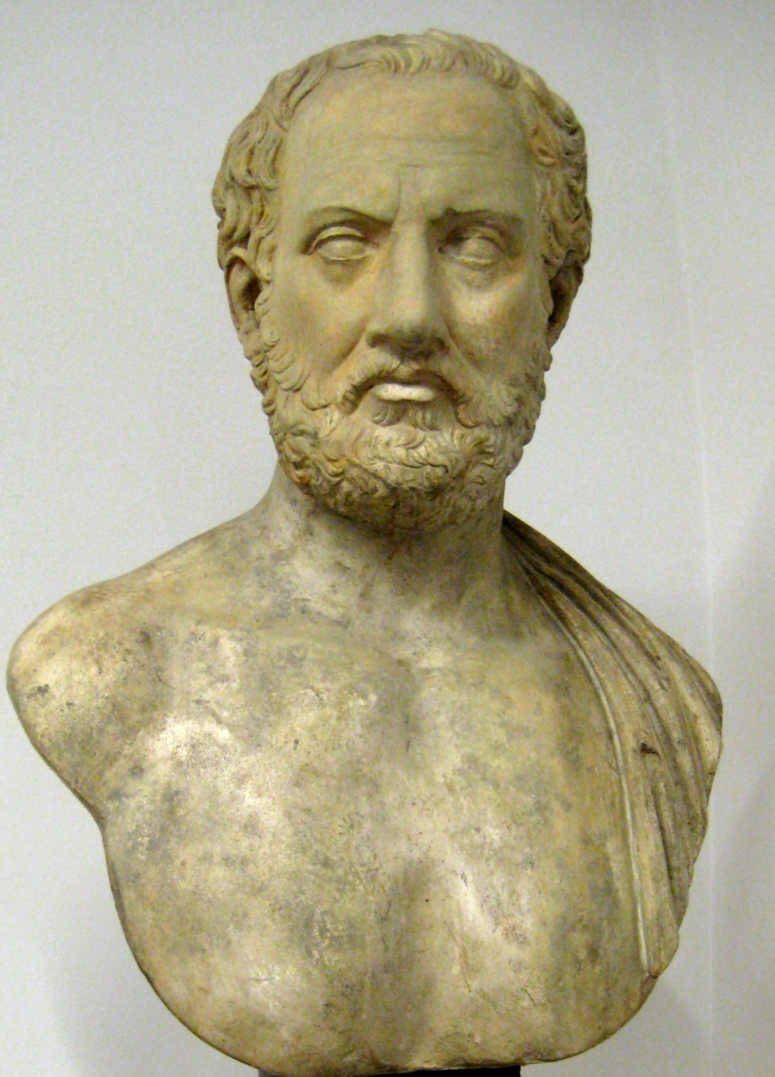
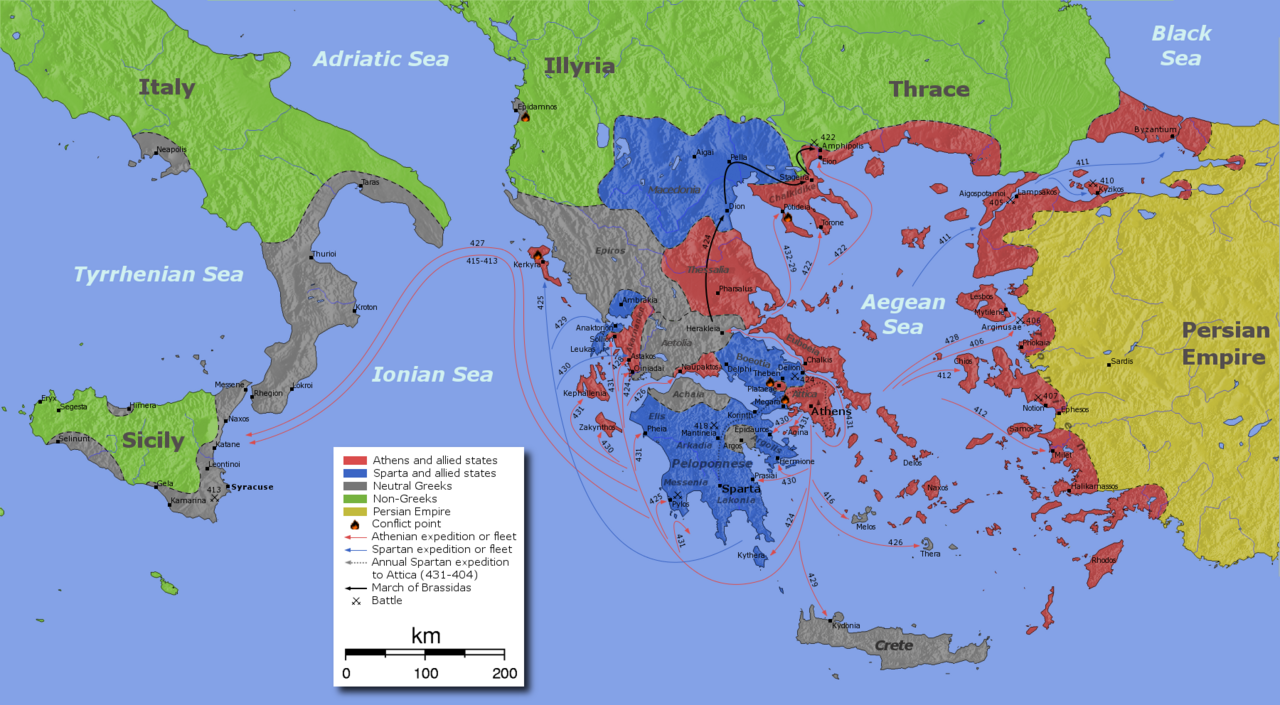
Thucydides participated in the Peloponnesian War as an Athenian general, was exiled after a military failure, and spent the remaining decades of his life writing its history. The History of the Peloponnesian War is simultaneously the first work of systematic historical analysis and the founding text of realist thought in international relations. What makes it the founding text is not its narrative brilliance but its analytical framework: the insistence that the causes of the war are to be found not in the specific grievances and incidents that triggered it but in the structural dynamics of power that made conflict between Athens and Sparta increasingly inevitable as Athenian power grew.
His observation, that it was the growth of Athenian power and the fear this inspired in Sparta that made war inevitable, is not simply a claim about one specific war. It is a general claim about the structural dynamic that operates whenever a rising power threatens the position of an established one. The Corcyra crisis, the dispute over Potidaea, the Megarian Decree: these are the occasions for war. They are not its cause.
The Melian Dialogue, the most famous passage in the History, is the canonical statement of realist logic in its starkest form. In 416 BC, an Athenian expedition to the island of Melos demanded the island's submission. The Melians argued that they should be allowed to remain neutral, that justice should count for something, that the gods would favour the just. The Athenians replied with what has become the most quoted formulation of realist logic in the entire canon: the strong do what they can, and the weak suffer what they must. Thucydides is not endorsing the Athenian position. He is describing it with analytical clarity. The Melians were killed or enslaved.
The Melian Dialogue is not Thucydides endorsing Athenian power politics. It is Thucydides showing what power politics looks like from the inside. The lesson is not that Athens was right. It is that the appeal to justice was irrelevant to the Athenians' decision. Understanding why requires understanding the structural logic of power in which they were operating.
The Realist Tradition from Machiavelli to Morgenthau
The intellectual lineage from Thucydides to modern realism runs through several crucial nodes, each of which added specific analytical elements to the framework.
The concept of the balance of power, perhaps the central concept in classical realist theory, describes the tendency of states in an anarchic international system to form alliances and build capabilities in ways that prevent any single state from achieving dominance. The coalitions that formed against the hegemonic ambitions of Philip II of Spain, Louis XIV, Napoleon, Wilhelmine Germany, Nazi Germany, and the Soviet Union are all instances of the balance of power mechanism in operation. But the record also contains important failures: cases in which states bandwagoned with the rising power rather than balancing against it, in which the costs of balancing exceeded the political will available to sustain it.
The arming that produces the dilemma is not caused by bad intentions. It is caused by the impossibility of knowing, with certainty, that the other party's intentions are good.
The Security Dilemma in Detail
The security dilemma, identified by Hobbes and formalised by the political scientist John Herz in 1950, describes a structural dynamic in which the actions any state takes to increase its own security necessarily decrease the security of other states, producing a spiral of armament and counter-armament that leaves all parties worse off than mutual restraint would have, even when no state intends to attack any other.
State A, facing uncertainty about the intentions of State B, increases its military capabilities as a precaution. State B observes State A's buildup and, unable to know with certainty whether it is defensive or offensive in intent, responds by increasing its own capabilities. State A observes State B's response and concludes that its initial security concerns were justified, increasing its capabilities further. The spiral continues until both states are spending more on security than either would have chosen under conditions of mutual trust, and both face a now-armed adversary they did not face before the spiral began.
Robert Jervis's crucial contribution, in his 1978 article Cooperation Under the Security Dilemma, was the identification of the conditions under which the dilemma is more or less severe. The key variable is the offensive-defensive balance: the degree to which the technology and geography of military conflict favours offensive or defensive operations. Jervis added a second dimension: the degree to which offensive and defensive postures are distinguishable from each other. When offensive and defensive capabilities are distinct and observable, a state can credibly signal its defensive intentions. When they are indistinguishable, every military buildup looks threatening regardless of intent.
Distinguishable
Indistinguishable
Dominant
States can signal defensive intent through posture. Security can be achieved at moderate cost. Arms control is feasible. The Cold War's clearest periods of detente approached this quadrant.
States feel relatively secure but cannot clearly signal intent. Diplomatic channels and transparency measures can partially compensate. Confidence-building measures are valuable.
Dominant
Offence is cheap, creating pressure to strike first. But states can signal they are not preparing to strike. Stable deterrence with careful communication is possible but demanding.
The most dangerous quadrant. Offence is easy and intent is unreadable. Every military move looks like preparation for attack. The US-China competition in the western Pacific approaches this quadrant. War becomes possible even without aggressive intentions on either side.
The contemporary Chinese-American security relationship has both characteristics that make the security dilemma severe. The relevant military technologies, anti-ship missiles, hypersonic weapons, cyber capabilities, space assets, are dual-use in ways that make offensive and defensive uses difficult to distinguish. The geographic context, the western Pacific with its contested maritime territories and multiple potential flashpoints, creates conditions in which defensive and offensive military postures are difficult to separate. The result is a security spiral that both governments have attempted to manage through arms control discussions and confidence-building measures, with limited success.
Graham Allison and the Thucydides Trap
In 2017, the Harvard political scientist Graham Allison published Destined for War: Can America and China Escape Thucydides's Trap? The book's central claim is that the structural dynamic Thucydides identified in the Athenian-Spartan case, the combination of a rising power's growing confidence and a ruling power's growing fear, creates conditions in which war is historically likely even when neither party wants it and both parties have strong incentives to avoid it.
Allison developed a historical survey of sixteen cases since the late fifteenth century in which a rising power threatened to displace a ruling power. He found that twelve of the sixteen cases ended in war. His four cases of peaceful transition, the United States displacing Britain in the late nineteenth and early twentieth centuries, the Soviet Union's rise and eventual fall without direct great-power war, and Germany and Japan's post-war rise within the American-led order, all involved specific factors that mitigated the structural pressure: shared cultural and linguistic ties, the deterrent effect of nuclear weapons, or the incorporation of the rising power into an institutional order designed by the ruling power.
The contemporary relevance is explicit in Allison's argument. China's GDP, measured in purchasing power parity terms, has moved from roughly 10 percent of American GDP in 1980 to approximate parity by the late 2010s. The structural conditions that Thucydides identified as the cause of the Peloponnesian War are present in the contemporary Sino-American relationship: a rising power whose confidence is growing and a ruling power whose fear of displacement is increasing.
The twelve-of-sixteen figure is a starting point. The analytically important question is what distinguishes the four peaceful cases from the twelve that ended in war. That question is harder than the headline number and more useful.
The Serious Criticisms of the Thucydides Trap
The most important criticism of Allison's framework is not the objection that historical analogies are imprecise, which is trivially true. It is the specific objection that the case selection and analytical method are flawed in ways that affect the conclusions.
The political scientist Richard Ned Lebow has made a systematic methodological argument: Allison's case selection is subject to confirmation bias. By defining a Thucydides situation broadly, as any case in which a rising power threatened a ruling power, and then looking for cases that fit this description, Allison has identified a biased sample. The population of power transitions is larger than sixteen cases, and many transitions did not produce war. The relevant question is not whether war followed in twelve of sixteen selected cases but what proportion of all power transitions in the historical record ended in war, and whether that proportion is higher than the base rate of great-power wars over the same period.
The political scientist Steve Chan has conducted a more systematic analysis addressing these concerns. His finding is that the relationship between power transitions and wars is considerably weaker than Allison's case selection suggests, and that the specific conditions Allison identifies as mitigating factors are not exceptional features of a few atypical cases but common features of the modern international environment that substantially alter the structural dynamic Thucydides was describing.
The most important substantive criticism concerns the analogy itself. Ancient Greece was a system of small city-states with limited strategic depth, no nuclear weapons, no complex economic interdependence, and no international institutions. A conflict between the United States and China would involve nuclear powers with enough warheads to destroy human civilisation many times over, deeply economically interdependent with each other and with every other major economy, embedded in a web of international institutions, possessing military technologies whose first use would create escalation risks with no historical precedent.
The appropriate response to these criticisms is not to dismiss the Thucydides Trap concept. It is to use it with the precision its analytical basis actually supports. The framework identifies a real structural tendency. The conditions under which that tendency produces war versus peaceful accommodation are the analytically important question, and the answer is more complex and more contingent than the twelve-of-sixteen headline figure suggests.
Offensive and Defensive Realism
Offensive realism, most systematically developed by John Mearsheimer in his 2001 work The Tragedy of Great Power Politics, holds that states seek not merely adequate security but maximised power, and that this drive for power maximisation is the product of structural incentives rather than the character or preferences of specific states. In an anarchic international system, no state can ever be certain that its current power position will be adequate to deter future threats. The only way to be truly secure is to be so powerful that no other state can threaten you. Therefore, rational states will seek to maximise their relative power position whenever the opportunity arises.
Defensive realism, associated most closely with Kenneth Waltz, holds that the structural incentives of the international system push states toward security rather than power maximisation. States want adequate security, not unlimited power, and excessive power acquisition is counterproductive because it triggers the balancing behaviour of other states. The rational response to the security dilemma is not to maximise power but to seek the level of power necessary for security while avoiding the arms races that excessive acquisition would generate.
The debate has direct implications for how to interpret Chinese and American strategic behaviour. If Mearsheimer is right, Chinese foreign policy since the 2010s, the development of a more assertive posture in the South China Sea, the Belt and Road Initiative, and the military modernisation programme, is the predictable consequence of China's increasing power: a rising great power expanding its influence as structural theory predicts. If the defensive realists are right, Chinese assertiveness represents a response to specific security concerns, principally the presence of American military forces in the western Pacific, that might be addressed through specific reassurances without requiring Chinese acceptance of permanent strategic inferiority. The policy implications differ substantially.
The structural preconditions for Thucydides dynamics, a rising power's growing confidence and a ruling power's growing fear, are not measured by any single metric. They are produced by the aggregate shift in relative capability across multiple dimensions simultaneously. The chart above shows that shift. What it does not show is whether it will produce conflict. That depends on the conditions that distinguish the four peaceful transitions from the twelve that ended in war.
The Structural Critiques of Realism
The realist tradition has generated powerful critiques from several directions, and the most important of these should be engaged rather than dismissed, because they identify real limitations in the realist framework that must be accounted for in any serious application.
The liberal institutionalist critique, associated most prominently with Robert Keohane and Joseph Nye, argues that realism systematically underweights the role of international institutions in shaping state behaviour. Their concept of complex interdependence, developed in Power and Interdependence published in 1977, holds that when states are deeply economically interdependent and embedded in a dense network of international institutions, the costs of conflict are substantially higher than in the Westphalian world of purely sovereign states that classical realism describes. States in conditions of complex interdependence have strong incentives to maintain the institutional order that enables their economic prosperity.
The constructivist critique, developed by Alexander Wendt in Social Theory of International Politics published in 1999, argues that realism treats the anarchic international system as a structural given when it is in fact a social construction. Wendt's famous formulation, that anarchy is what states make of it, captures the insight: the meaning of anarchy, and the behaviour it generates, depends on the shared understandings and norms that states develop through their interactions with each other. States that have developed a norm of non-aggression toward each other, as the members of the European Union have, behave very differently than states that regard each other as potential adversaries, even under the same formal condition of international anarchy.
Realism is correct that power is a fundamental variable in international relations. It is wrong to the extent that it treats state interests as fixed and given rather than as shaped by the shared social understandings within which states operate. Anarchy is what states make of it. This is not a comfortable claim for those who prefer structural determinism. It is an empirically correct one.
Anarchy is what states make of it. This is not a comfortable claim for those who prefer structural determinism. It is an empirically correct one.
The Contemporary Application: US-China Competition
The analytical frameworks examined in this artifact converge on the central strategic question of the early twenty-first century: whether the competition between the United States and China is producing the conditions for conflict that the grammar of power identifies as dangerous.
The structural case for pessimism is strong. The power transition is real: China's relative position has improved dramatically over four decades, and American primacy is less complete than it was in 1991 by every relevant measure. The specific flashpoints, Taiwan, the South China Sea, the competition for technological leadership, are real. The domestic political pressures in both countries that constrain the range of accommodation that is politically feasible are real. And the security dilemma dynamics in the western Pacific have the characteristics of the severe quadrant in Jervis's matrix: offence-dominant technology and indistinguishable postures.
The structural case for cautious optimism is also available. Nuclear deterrence creates a powerful constraint on the escalation of great-power competition to direct military conflict, as the entire Cold War demonstrates. Economic interdependence creates specific interests in avoiding the disruption that major conflict would produce. The existence of international institutions through which both powers participate in the management of the global commons creates channels for communication and accommodation that were not available to Athens and Sparta. And the lessons of the specific historical cases in which Thucydides dynamics were managed peacefully suggest that peaceful management of power transitions is possible even if it is not common.
The most important single insight the realist tradition offers for this situation is that the danger lies not in the intentions of either party but in the structural dynamics that create incentives for miscalculation. A US-China war that neither party wants or intends remains possible precisely because the structure of the situation creates conditions in which actions taken for defensive reasons are perceived as offensive, in which commitments made for domestic political reasons create obligations difficult to withdraw, and in which specific incidents can trigger escalation dynamics that were not anticipated.
Morgenthau's Prudence and Its Meaning
The classical realist tradition, particularly in Morgenthau's formulation, contains a concept that is frequently underemphasised in contemporary applications of realist theory: the concept of prudence. Morgenthau does not present realism as a mandate for power maximisation. He presents it as a framework for sober evaluation of strategic choices, within which the crucial practical virtue is prudence, the ability to weigh the costs and benefits of specific actions against the concrete interests of the state rather than against ideological abstractions.
Prudence, in Morgenthau's account, requires the willingness to distinguish between what is desirable and what is achievable. It requires the capacity to accept limited outcomes when unlimited ones are not available. It requires the restraint to avoid actions that serve ideological goals while damaging concrete power interests. And it requires the honesty to evaluate policies by their actual consequences rather than by the moral quality of the intentions behind them.
This Morgenthau-ian prudence is relevant to the contemporary strategic environment in a way that neither pure power maximisation nor idealistic restraint can be. The United States cannot maintain the absolute primacy of the 1991 moment indefinitely. China cannot achieve the regional hegemony that Mearsheimer's structural theory predicts it will seek without triggering the balancing behaviour that has historically constrained rising powers. The question is not whether accommodation or confrontation is morally preferable. The question is what specific arrangements serve the concrete interests of both parties better than the alternative of unconstrained competition.
Morgenthau's prudence does not mandate accommodation or confrontation. It mandates the honest evaluation of what accommodation and confrontation will actually cost and produce. That is harder than either slogan, and more useful than both.
The Grammar Extends
In the absence of a common authority, states must ultimately rely on themselves for security. This produces structural incentives for power acquisition that operate regardless of the intentions of specific states or leaders. The security dilemma is not a pathology of bad actors. It is the structural consequence of the absence of world government, and it operates wherever that absence persists. Understanding this does not excuse specific aggressive acts. It explains the structural environment in which even non-aggressive actors generate conflict dynamics.
The most dangerous moment in the dynamic between a rising and a ruling power is not when the rising power has achieved supremacy. It is during the transition period, when the ruling power's position is sufficiently threatened to generate fear but the rising power has not yet achieved the position that would make accommodation a practical option. The miscalculations, the alliance obligations, the domestic political pressures, and the specific incidents that trigger conflicts typically accumulate during this transition period, not before or after it.
The distinction between the immediate cause of conflict and the structural cause is analytically crucial. The Sarajevo assassination did not cause the First World War. It provided the occasion for a war whose structural causes had been accumulating for decades. The policymaker who focuses exclusively on managing specific incidents without addressing the structural dynamics that make those incidents explosive is treating symptoms while the disease advances.