The Dollar
as Power
How reserve currency status became America's most consequential geopolitical instrument, and what its erosion will mean
The Grammar of Power
What Reserve Currency Status Actually Means
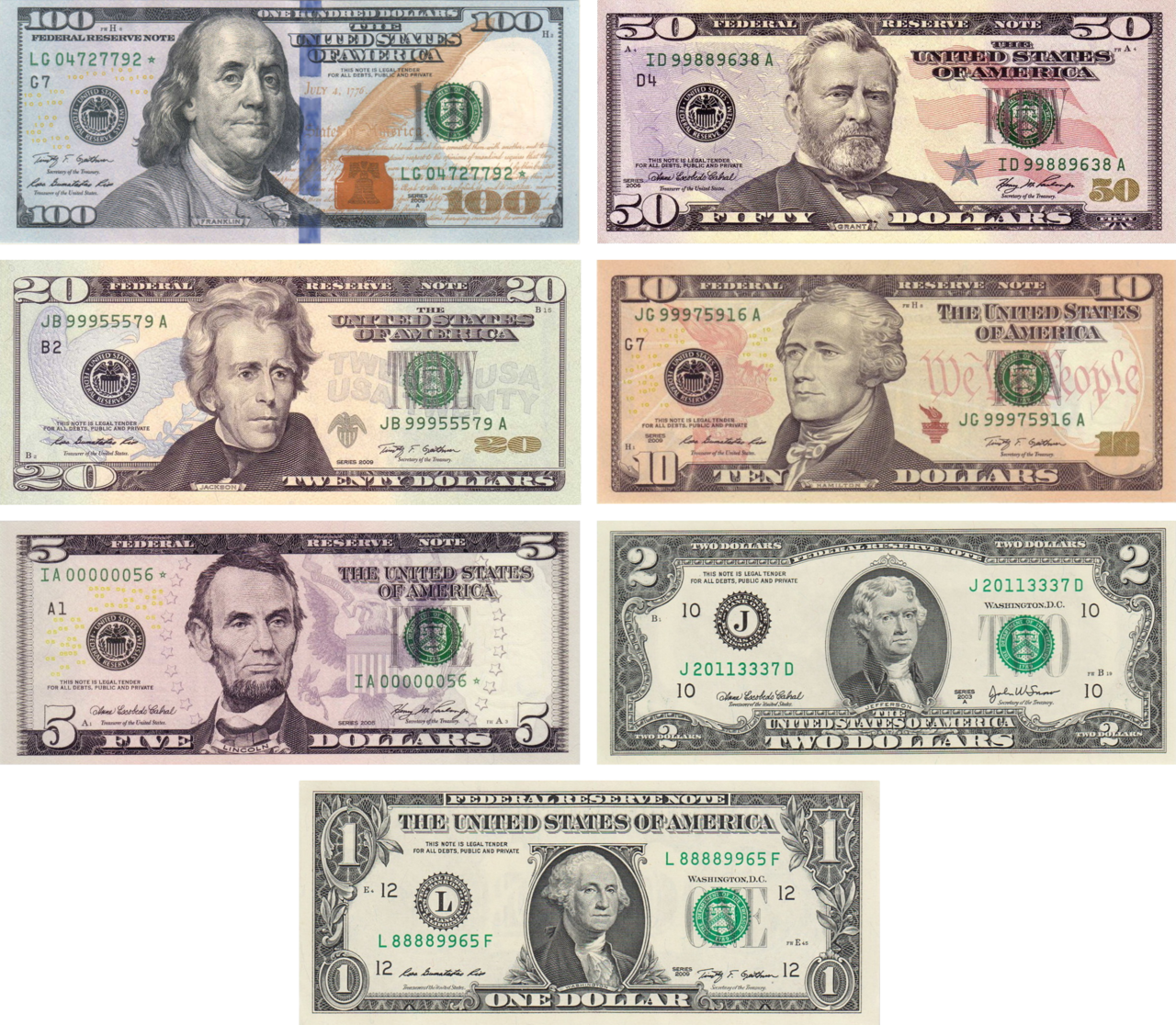
A reserve currency is a currency held by central banks as part of their foreign exchange reserves, used to denominate international trade, and treated as the default medium of exchange in international financial transactions. The dollar performs these functions on a scale that no other currency approaches: it is the denomination of roughly 60 percent of global foreign exchange reserves, the invoicing currency of roughly 50 percent of global trade, and the settlement currency of over 85 percent of global foreign exchange transactions.
When a Thai company imports machinery from Germany, the transaction is typically denominated in dollars and settled through the dollar-denominated correspondent banking system, even though neither party is American and neither country uses the dollar domestically. When a Malaysian oil company sells crude oil to a South Korean refinery, the price is typically set in dollars, the payment is made in dollars, and both parties need dollar access to complete the transaction. The dollar is not simply the currency of the United States. It is the operating system of the global economy.
The economist Barry Eichengreen, in his 2011 work Exorbitant Privilege, named the advantage this confers after the phrase coined by French Finance Minister Valéry Giscard d'Estaing in the 1960s: the exorbitant privilege. The privilege has several distinct components.
The United States borrows in dollars, so a depreciation of the dollar reduces rather than increases the real burden of American debt. Countries that borrow in dollars but earn in local currency face the opposite dynamic: dollar depreciation increases their debt burden.
The United States can consume more than it produces and finance the difference by issuing dollar-denominated assets that the rest of the world is eager to hold. No other country can run persistent current account deficits of comparable scale without facing currency crisis.
The profit from issuing the currency that the world uses represents a real transfer of resources from the rest of the world to the United States. Every dollar bill held outside the US is an interest-free loan to the American government. Every dollar-denominated Treasury held abroad is financing at below-market rates.
The dollar's centrality to the global financial system means the United States has structural leverage over any actor who needs access to that system, which means virtually every significant actor. This leverage can be converted into coercive power: the ability to cut actors off from the financial system entirely.
The dollar's share of global reserves has declined from roughly 73 percent in 2001 to approximately 58 percent in 2024. The shift is real but gradual, distributed across multiple currencies rather than flowing to a single successor. The renminbi's rise to approximately 2.5 to 3 percent is notable but still a distant second to the dollar.
The Architecture of Dollar Hegemony
The current dollar-centred international monetary system was not a natural evolution. It was deliberately constructed at a specific historical moment by American policymakers who understood exactly what they were building and what advantages it would confer.
The foundational moment is the Bretton Woods conference of July 1944. Two competing visions were on the table. John Maynard Keynes, representing Britain, proposed an international clearing union that would issue a new supranational currency, which he called the bancor, to serve as the international reserve asset. Under Keynes's scheme, both surplus and deficit countries would face adjustment obligations, and no single national currency would occupy the privileged position of reserve asset.
Harry Dexter White, representing the United States, proposed an alternative architecture centred on the dollar, pegged to gold at $35 per ounce, with other currencies pegged to the dollar and the International Monetary Fund established with voting rights weighted by economic size, giving the United States an effective veto over IMF decisions. White won. Keynes lost. The exorbitant privilege has been the consequence ever since.
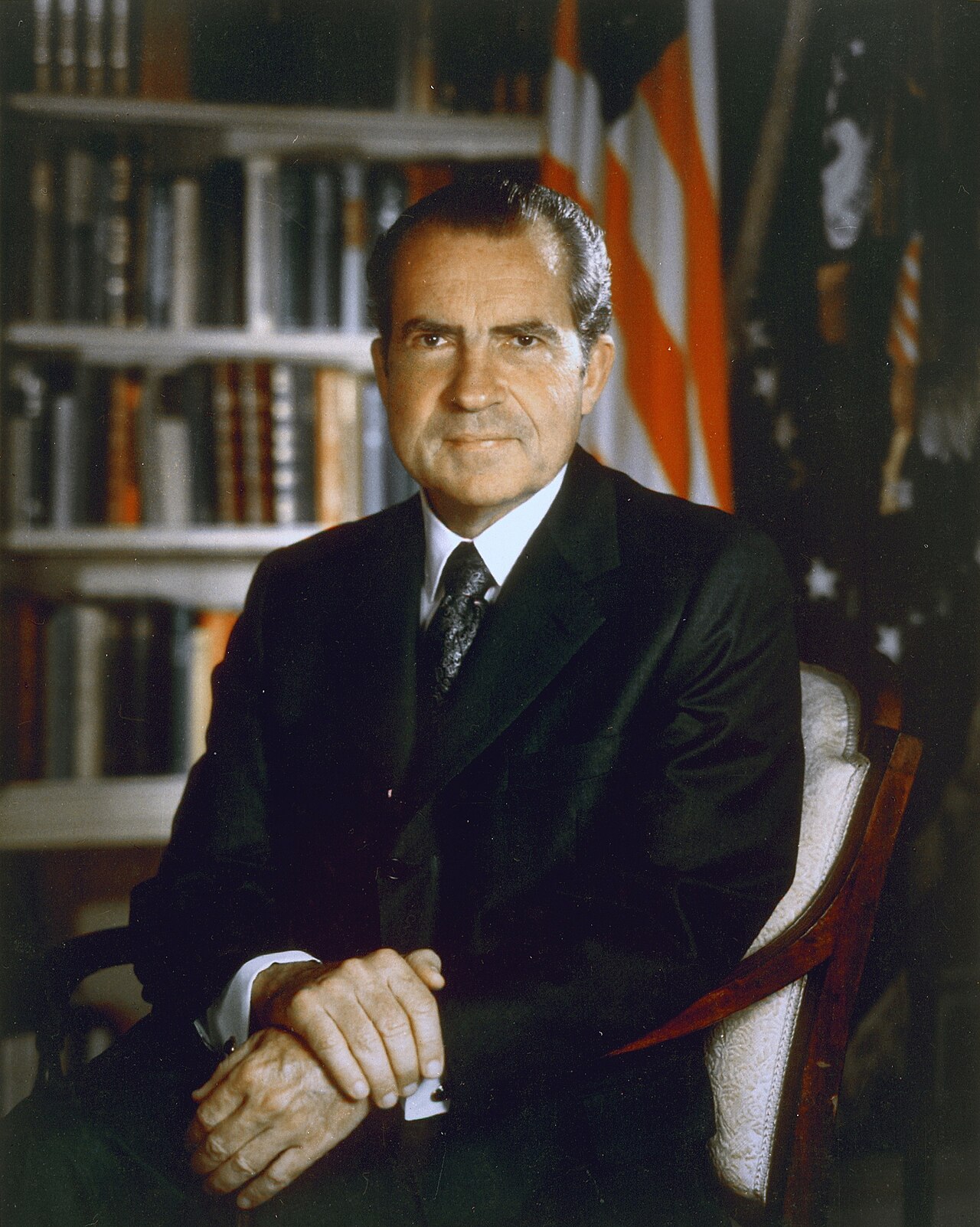
The original Bretton Woods system broke down in 1971 when President Nixon suspended the dollar's convertibility to gold, responding to the pressure generated by American balance-of-payments deficits. The Nixon Shock ended the gold-dollar link that had been the formal basis of dollar primacy. What followed was not the end of dollar hegemony but its transformation into a new form: the petrodollar system.
Keynes lost at Bretton Woods. The world got White's architecture instead. The exorbitant privilege has been the consequence ever since.
The Petrodollar System
The reconstruction of dollar primacy after the collapse of Bretton Woods is one of the most consequential and least publicly discussed episodes in the history of American geopolitical strategy. The mechanism it produced, the petrodollar system, has shaped the architecture of global finance for half a century.
The core of the arrangement was negotiated by Secretary of State Henry Kissinger and Treasury Secretary William Simon with Saudi Arabia in 1974 and 1975. The deal had two essential elements. Saudi Arabia would denominate its oil exports in dollars and would invest a substantial portion of its oil revenues in US Treasury securities. In exchange, the United States would provide security guarantees to the Saudi regime, supply military equipment, and maintain the naval presence that protected Saudi Arabia and the wider Gulf from external threats.
The consequences were structural and far-reaching. Oil is the single most important commodity in the global economy. By ensuring that oil was priced and settled in dollars, the petrodollar arrangement guaranteed that every country that imported oil, which meant virtually every country in the world, needed to maintain dollar reserves to pay for its energy imports. The dollar's role as the global reserve currency was no longer merely a legacy of Bretton Woods. It was anchored in the fundamental energy requirements of the global economy.
The recycling of petrodollar surpluses through US Treasury markets added a second dimension: it created a mechanism through which oil revenues of the Gulf states flowed back into the US financial system as demand for American government debt, helping to fund American fiscal deficits at lower interest rates than would otherwise have been possible. The United States paid for its oil imports partly in dollars that came back to it as capital flows, a circularity that amounted to an implicit subsidy for American consumption and government spending.
The Weaponisation of the Dollar
The transformation of the dollar's structural centrality into an active instrument of coercive power proceeded gradually from the 1970s onward, accelerating dramatically after the September 11, 2001 attacks, and reaching a qualitative new level with the 2022 freezing of Russian sovereign assets.
The legal and institutional architecture of dollar weaponisation was constructed primarily through the Bank Secrecy Act of 1970, the International Emergency Economic Powers Act of 1977, and the USA PATRIOT Act of 2001. These statutes gave the US government the authority to designate individuals, organisations, and states as targets for financial exclusion, to compel US financial institutions and, through the doctrine of secondary sanctions, non-US financial institutions to cease dealing with designated targets, and to freeze the US-held assets of designated parties.
The power of secondary sanctions was dramatically demonstrated by the BNP Paribas case of 2014, in which the French bank was fined approximately $8.9 billion by American authorities for processing dollar transactions for entities in Sudan, Iran, and Cuba in violation of American sanctions. BNP Paribas is a French bank. The transactions were conducted by its employees in Paris, Geneva, and Singapore. The counterparties were not American entities. The jurisdictional basis for the American fine was solely the fact that the transactions had been denominated in dollars and routed through the US correspondent banking system. The size of the fine communicated to every major bank in the world the cost of transactions that violated American sanctions regardless of where they were conducted.
By 2022, the United States was maintaining comprehensive sanctions programmes against more than thirty countries or territories, and the number of individuals and entities on OFAC's designated lists had grown to over 12,000. Dollar weaponisation had become not an emergency instrument but a routine feature of American foreign policy.
The 2022 Freezing and Its Consequences
The most consequential single deployment of dollar weaponisation in the history of the international monetary system occurred on February 28, 2022, four days after Russia invaded Ukraine. In coordination with the European Union, the United Kingdom, Canada, and Japan, the United States froze approximately $300 billion of Russia's central bank foreign exchange reserves held in Western financial institutions.
This action was qualitatively different from all previous applications of financial sanctions for a specific reason: it targeted the foreign exchange reserves of a sovereign central bank, the assets that every central bank holds as the ultimate backstop of its financial system. Central bank reserves are held in reserve currencies precisely because they are supposed to be safe and accessible. The freezing demonstrated that reserve currency status confers on the issuing state and its allies not just financial leverage but the ability to expropriate the sovereign assets of any state that holds its reserves in dollars, euros, or pounds.
The analyst most associated with the thesis that this represented a fundamental turning point is Zoltan Pozsar, formerly of the Federal Reserve, the Treasury, and Credit Suisse, who published a series of widely read research notes in 2022 and 2023 arguing for what he called Bretton Woods III: the emergence of a commodity-backed monetary order centred on the Global South as a partial replacement for the dollar-centred system he argued had been fatally compromised by the weaponisation of reserve assets. Pozsar's three central claims: that the freezing demonstrated that dollar reserves are not a neutral store of value but a political asset; that this would accelerate diversification away from dollar reserves; and that the resulting shift toward commodity-backed alternatives would produce a structural change comparable to the collapse of Bretton Woods in 1971.
The freezing of Russian central bank reserves demonstrated to every government in the world that dollar reserves are not a neutral store of value. They are a political asset whose accessibility depends on the political relationship between the holder and the United States.
Eichengreen's Counter and the Limits of the Thesis
Barry Eichengreen, whose work on reserve currency history is among the most authoritative in the field, has provided the most systematic counter to the more dramatic versions of the de-dollarisation thesis. His argument is not that the dollar's position is invulnerable to challenge. It is that the structural factors that have sustained dollar primacy are more durable than the de-dollarisation advocates acknowledge.
Eichengreen's central argument is that reserve currency status is not simply a matter of choice or policy. It reflects a combination of structural factors that are difficult to replicate and that require decades of institutional development to establish. The depth and liquidity of US Treasury markets, which absorb roughly $25 trillion in outstanding debt and trade billions of dollars daily with minimal transaction costs, is a structural asset that no alternative reserve currency issuer can currently match. The rule of law that protects property rights in the United States, the institutional infrastructure of the Federal Reserve and the American banking system, and the network effects of an international financial system built around dollar-denominated instruments: these are not features that can be replicated by an act of political will.
Eichengreen also argues that the historical record of reserve currency transitions is poorly understood. The dollar did not replace sterling overnight: the transition from sterling to dollar primacy took roughly thirty years, from the 1920s to the 1950s, during which both currencies served reserve functions simultaneously. The relevant historical lesson is not that reserve currency transitions happen rapidly but that they happen slowly, with persistent incumbency advantages for the existing reserve currency, and that the new reserve currency must offer not just political neutrality but the full package of liquidity, depth, rule of law protection, and institutional infrastructure.
The most precise formulation is probably neither Pozsar's Bretton Woods III nor Eichengreen's dollar durability thesis, but something between them: a gradual erosion of dollar dominance, accelerated by weaponisation, producing a more multipolar monetary system over the coming decades, without a clean transition to a new hegemonic reserve currency in the foreseeable future.
SWIFT, Correspondent Banking, and the Plumbing of Dollar Hegemony
SWIFT, the Society for Worldwide Interbank Financial Telecommunication, is a Belgian cooperative that provides the messaging infrastructure through which banks around the world communicate payment instructions. It is not itself a payments system: SWIFT does not move money, it moves the messages that instruct banks to move money. But its near-universal adoption means that disconnection from SWIFT effectively cuts a bank off from the international financial system. When seven Russian banks were disconnected from SWIFT in 2022, the immediate operational effect was the disruption of their ability to process international payments, with the most severe consequences in dollar markets.
The correspondent banking system is the more fundamental mechanism through which dollar weaponisation operates. Correspondent banking is the arrangement by which banks in one country maintain relationships with banks in other countries to process international payments on each other's behalf. The dollar's centrality means that virtually every major bank in the world maintains a correspondent banking relationship with a major American bank. American banks are subject to American law, including OFAC regulations. This creates a transmission mechanism: any non-American bank that continues to process transactions for OFAC-designated parties risks losing its US correspondent banking relationships, which means losing access to dollar markets, which means losing the ability to process the majority of its international transactions. This is the mechanism through which secondary sanctions reach foreign banks without requiring direct legal jurisdiction over them.
The dollar's share of SWIFT payment messages, foreign exchange transactions, trade invoicing, international debt denominated in dollars, and central bank reserves all substantially exceed the United States' share of global GDP (approximately 25 percent). The premium over economic weight is the measure of the structural privilege.
The Renminbi and the Challenge to Dollar Primacy
The most sustained effort to develop an alternative to dollar primacy is China's internationalisation of the renminbi, pursued as an explicit policy objective since approximately 2009 and intensified significantly after the 2022 freezing of Russian reserves. China's approach has proceeded through several channels: the currency swap lines that the People's Bank of China has established with over forty central banks; the Cross-Border Interbank Payments System (CIPS), established in 2015; and the expansion of renminbi-denominated oil contracts on the Shanghai International Energy Exchange, established in 2018.
The progress of renminbi internationalisation has been real but slower than the most optimistic projections suggested. The renminbi's share of SWIFT payments has grown from essentially zero in 2010 to approximately 3 to 4 percent in 2024, making it one of the top five currencies in international payments but still a distant second to the dollar at over 40 percent.
The structural obstacles to renminbi internationalisation reflect genuine policy choices by the Chinese government. The most important is capital account convertibility: the renminbi is not freely convertible, meaning that foreign holders cannot freely convert it into other currencies without regulatory approval. This restriction protects Chinese financial stability and government control over domestic monetary conditions, but it also prevents the renminbi from serving as a genuine reserve currency, because central banks that hold renminbi cannot be certain they will have unrestricted access to its value in a financial crisis. Until Chinese financial markets develop the depth and institutional quality of US markets, the renminbi will remain a second-tier reserve currency regardless of the political motivations that might lead specific central banks to hold it.
The BRICS Currency and Its Prospects
The proposal for a BRICS currency, discussed at the 2023 BRICS summit in Johannesburg and periodically revived as a geopolitical statement of intent, represents the most ambitious challenge to dollar primacy currently on the table but also the most structurally constrained.
The structural obstacles are severe. The BRICS grouping includes countries with fundamentally incompatible economic interests, very different inflation rates, fundamentally different monetary policy frameworks, and profound geopolitical tensions with each other. India and China have an unresolved border dispute and compete for regional influence across South Asia and the Indian Ocean. The creation of a common currency requires, at minimum, a degree of monetary policy coordination and institutional trust that the BRICS grouping has never demonstrated.
The more realistic version is not a common currency but a set of bilateral and multilateral arrangements for settling trade in local currencies, bypassing the dollar for specific transactions while maintaining it as the primary international reserve asset. This is already happening at the margin: Russia-China trade is increasingly settled in rubles and renminbi, India-Russia energy trade has been partially settled in rupees and dirhams. But the aggregate effect on dollar primacy has been modest: the dollar remains the denomination of the vast majority of international trade, and the bilateral arrangements for dollar avoidance are high-transaction-cost workarounds rather than genuine alternatives.
The BRICS currency is a geopolitical statement of intent. It is not, currently, a functioning alternative to dollar primacy. The distance between those two things is where the serious analysis lives.
What De-dollarisation Actually Means
The debate about de-dollarisation is frequently conducted at a level of abstraction that obscures what would actually have to happen for the dollar to lose its reserve currency status. An alternative reserve asset would have to offer central banks the combination of liquidity, depth, rule of law protection, and political neutrality that makes reserve assets valuable. The network effects of the dollar-denominated financial system would have to be overcome through a coordinated shift by a large number of major actors. And the institutional infrastructure of dollar-denominated trade and finance would have to be either replaced or substantially reorganised. None of these conditions is currently close to being met.
The most likely trajectory for the international monetary system over the coming decades is a gradual, messy, and highly uneven erosion of dollar dominance, producing a system in which the dollar remains the dominant reserve currency but with a smaller share than it currently has, while multiple regional currencies and bilateral arrangements handle an increasing share of transactions at the margin. The consequences for American geopolitical power of this gradual erosion are real but more modest and slow-moving than either the alarmists or the dismissers suggest.
The more important immediate consequence of the 2022 freezing may be not the acceleration of de-dollarisation per se but the change in how other states calculate the risks of dollar-denominated reserve holdings. Every government that holds dollar reserves now knows, with a clarity they did not previously have, that those reserves are accessible only at the discretion of the United States. None will hold dollar reserves with quite the same assumption of unconditional safety that they held before February 2022.
The Grammar of Financial Power
Financial power in the international system operates through network effects: its value to any individual user depends on how many other users participate in the same network. This self-reinforcing quality gives established reserve currencies extraordinary stability, because any individual actor who diversifies away from dollars incurs costs in terms of liquidity and transaction costs that the actor who continues to hold dollars does not. The coordination problem of shifting to a new reserve currency is structurally identical to the coordination game described in Artifact III: everyone might benefit from a different equilibrium, but getting there requires a simultaneous shift that is very difficult to organise.
The weaponisation of financial architecture is self-limiting. Every deployment of dollar weaponisation provides incentives to every other actor in the international system to develop alternatives to dollar dependence. The sanctions pressure that has accelerated Chinese renminbi internationalisation, the freezing that has accelerated BRICS discussions about alternative payment arrangements, and the secondary sanctions pressure that has led multiple countries to develop dollar-bypass infrastructure are all rational responses to the demonstrated willingness of the United States to weaponise financial access. The United States is gradually consuming the structural advantage that dollar primacy represents by deploying it as a weapon.
Financial power reflects and reinforces underlying economic and political power rather than substituting for it. The dollar is the world's primary reserve currency because the United States was, for most of the post-war period, the world's dominant economy, the most important trading nation, and the provider of the security architecture within which global trade operated. As those underlying conditions change, the structural foundations of dollar primacy will continue to erode. Financial instruments can delay but cannot ultimately prevent the adjustment of financial architecture to the underlying distribution of economic and political power.