Information,
Narrative and
the Control of Minds
From Lippmann and Bernays through Soviet dezinformatsiya to the digital information war: the deepest form of power, and why it is the primary terrain of contemporary great-power competition
The Grammar of Power
The Taxonomy of Information Power
The analytical vocabulary for discussing information as power has three main terms, each capturing a distinct mechanism and a distinct set of actors.
Compulsion through military force and economic coercion. Does not require the consent of the subject. Imposes outcomes through the credible threat or actual exercise of violence or deprivation. The most visible and the most expensive to maintain.
Joseph Nye's concept: the ability to shape preferences through attraction and persuasion rather than compulsion. Operates by making others want what you want. Requires genuine cultural, political, and normative attractiveness that cannot be manufactured.
Introduced by Walker and Ludwig in 2017. Does not project attractive images. Manipulates information environments to undermine the capacity of open societies to function. Exploits the openness that produces soft power as the attack surface through which epistemological destruction enters.
Sharp power is categorically different from both hard and soft power. A society with a free press, open internet access, competitive political parties, and a culture of public debate is also a society in which false narratives can be introduced, amplified through existing media structures, and used to fragment the shared factual reality on which democratic deliberation depends. The same openness that produces soft power is also the attack surface that sharp power exploits. There is no clean technical fix for a problem that is embedded in the architecture of open society itself.
Walter Lippmann and the Discovery of Public Opinion
The modern analysis of information as power begins, in the American tradition, with Walter Lippmann, the political journalist and public intellectual whose Public Opinion, published in 1922, remains the foundational text for understanding the relationship between mass communication, political belief, and democratic governance.
Lippmann's central argument is deceptively simple. He begins with the observation that the world about which people form political opinions is not the world they directly experience. It is a pseudo-environment: a representation of the world constructed from the images, narratives, and information that reach them through the media of mass communication. The citizen of a modern democracy who forms a political opinion about a foreign policy question is not forming an opinion based on direct observation. They are forming an opinion based on representations of facts that have reached them through media. If political opinion is formed from media representations rather than direct observation, then political opinion can be systematically shaped by those who control the representations.
The philosopher John Dewey, in his response to Lippmann in The Public and Its Problems of 1927, offered a fundamentally different diagnosis. Dewey did not deny that mass media shaped public opinion or that the results were frequently distorted. But he argued that the solution was not technocratic management but the development of genuinely democratic communication: the creation of media institutions, educational structures, and civic practices that would enable ordinary citizens to form informed political judgments from their direct experience of community life. The Lippmann-Dewey debate remains the foundational intellectual contest in the theory of democratic communication, and neither side has clearly won.
Lippmann described the problem of democratic information management with the detachment of an analyst. Bernays solved it with the enthusiasm of a practitioner. The world they helped create has not resolved the tension between them.
Edward Bernays and the Engineering of Consent
Edward Bernays, the nephew of Sigmund Freud and the founder of what would become the public relations industry, published Propaganda in 1928 and The Engineering of Consent in 1947. His argument, stated with the directness of a practitioner who had no interest in concealing his methods from his clients, was that the manipulation of public opinion was not merely possible but necessary and desirable in a modern democracy, because the complexity of modern society exceeded the capacity of ordinary citizens to form rational political judgments from direct observation.
Bernays's techniques were not subtle. He orchestrated the famous 1929 campaign in which he arranged for debutantes to smoke cigarettes in the Easter Sunday parade in New York as a demonstration of women's independence, at the behest of Lucky Strike's parent company American Tobacco, which wanted to expand the female cigarette market. He organised press coverage, expert endorsements, and cultural associations that converted a product into a symbol, transforming the public's relationship to cigarettes through the manipulation of cultural meaning rather than through the provision of accurate information.
His representation of United Fruit Company interests in Guatemala in the early 1950s, which included the management of American press coverage to create support for the CIA-backed coup that overthrew the elected government of Jacobo Arbenz in 1954, is the canonical case of corporate public relations in the service of political regime change. The newspapers that reported Guatemalan communism as an existential threat to American interests were not simply repeating propaganda they had been given: they were operating within an information environment that Bernays and his clients had systematically constructed to make that interpretation appear self-evident.
Bernays's contribution to the grammar of power is the demonstration that information environments are not natural phenomena. They are constructed. The construction is often deliberate, often professional, often well-funded, and usually invisible to the audiences whose beliefs it shapes. The relevant question for any consumer of political information is not whether the information environment they inhabit is constructed but who constructed it and for what purposes.
Chomsky and Herman's Propaganda Model
The most systematic academic analysis of how information environments are constructed in liberal democracies is Noam Chomsky and Edward Herman's Manufacturing Consent: The Political Economy of the Mass Media, published in 1988. Their argument is structural rather than conspiratorial: the structure of the media industry, the ownership patterns, the dependence on advertising revenue, the reliance on government and corporate sources, and the professional ideologies of journalism produce systematic distortions in what gets covered and how, without requiring any individual to consciously intend those distortions.
The model's enduring value is its insistence that media outputs cannot be understood without understanding the institutional structures within which they are produced. The same story can be told in ways that systematically favour specific interpretations, not through conscious distortion but through the structural biases built into the information-gathering and presentation processes. Understanding those biases is a prerequisite for critical consumption of political information.
The Soviet dezinformatsiya programme did not require its fabrications to be believed by majorities. It required only that enough doubt be introduced to prevent consensus. That calculus has not changed. The tools available to execute it have been transformed beyond recognition.
Soviet Dezinformatsiya and Its Lessons
The Soviet dezinformatsiya programme, developed systematically from the 1920s onward and reaching its greatest sophistication under the KGB's active measures operations during the Cold War, is the most extensively studied case of a state information operation aimed at manipulating the political beliefs of foreign populations and undermining the cohesion of adversary societies.
Soviet active measures operated through several distinct channels. The forgery programme produced false documents attributed to American officials or institutions, designed to damage American credibility: fabricated evidence of CIA involvement in the assassination of foreign leaders, forged State Department cables, invented documents purporting to show American support for racist organisations. The disinformation campaign introduced false narratives into foreign media through front organisations, sympathetic journalists, and the manipulation of authentic grievances to serve Soviet strategic objectives.
Operation INFEKTION of the early 1980s, in which Soviet intelligence disseminated a narrative through African and Asian media claiming that the AIDS virus had been created by the US Army at Fort Detrick, Maryland, as a biological weapon, is the canonical case. The narrative was false. It was introduced through a Soviet-aligned Indian newspaper and then amplified through other publications that did not understand its origins. The campaign did not succeed in establishing the false narrative as fact in mainstream Western discourse, but it succeeded in introducing sufficient confusion and uncertainty that some proportion of the target audience retained residual doubt. Creating doubt is often as strategically valuable as establishing a counter-narrative.
The Digital Transformation of Information Warfare
The transition to digital communication networks and social media platforms has transformed the landscape of information operations in ways that have both amplified analogue-era techniques and created qualitatively new vulnerabilities in open societies that did not previously exist.
The critical structural shift is the transformation of information distribution from a broadcast model to a networked model. In the broadcast model, information reaching large audiences had to pass through a limited number of editorial chokepoints: newspapers, television networks, radio stations. These chokepoints were imperfect and biased in the ways that Chomsky and Herman described. But they also provided a degree of quality control, fact-checking, and editorial judgment that filtered out the most egregious falsehoods before they reached mass audiences. In the networked model, any piece of information can reach large audiences directly, without passing through any editorial checkpoint.
The platform architecture of social media compounds this problem through the design of recommendation and amplification systems. The business model of advertising-supported social media platforms requires the maximisation of user engagement, and the content that generates the most engagement is disproportionately content that triggers strong emotional responses: outrage, fear, contempt, tribal solidarity. Algorithmic amplification of emotionally engaging content does not distinguish between authentic outrage and manufactured outrage, between genuine tribal solidarity and coordinated artificial amplification of tribal division. It amplifies whatever generates engagement, regardless of its truth value or its effects on social cohesion.
Russia's Information Operations Model
The contemporary information operations model developed by Russia under Vladimir Putin's intelligence-shaped political culture represents the most sophisticated and extensively studied example of sharp power as a strategic instrument. Its intellectual foundation draws on a theoretical framework associated with Valery Gerasimov, Chief of the Russian General Staff, whose 2013 article in the Military-Industrial Courier described what Western analysts subsequently called the Gerasimov Doctrine: the blurring of the distinction between war and peace through the use of information operations, political subversion, economic leverage, and proxy forces to achieve strategic objectives without formal military engagement.
The primary objective of Russian information operations in Western democracies is not, as is sometimes claimed, primarily to promote specific political outcomes. It is more fundamental and more destructive: to undermine the shared factual reality on which democratic deliberation depends. If a sufficient proportion of the population of a target democracy cannot agree on basic facts about what is happening, who is responsible, and what the available options are, then the political system of that democracy becomes progressively unable to make coherent collective decisions. The goal is not to replace one narrative with another. It is to make narrative itself unreliable.
The 2016 American presidential election is the most extensively documented case. The Senate Intelligence Committee reports, the Mueller Report, and the subsequent academic literature document a sustained, multi-channel Russian information operation that combined social media manipulation, targeted advertising, hacking of the Democratic National Committee and Clinton campaign, the use of WikiLeaks as a leaking platform, and the cultivation of relationships with specific political figures and media outlets. The operation did not determine the outcome of the election. It succeeded in deepening existing social and political divisions, damaging the credibility of the democratic process itself, and introducing specific narratives into the mainstream information environment.
China's Information Environment Management
China's approach to information control differs from Russia's in its primary focus, its institutional structure, and its underlying objectives. China's information strategy has two distinct dimensions. Internally, it represents the most technically sophisticated and institutionally comprehensive system of information control ever deployed at national scale: the Great Firewall, the censorship and surveillance infrastructure that limits the information available to the Chinese population and shapes the political beliefs and nationalist identity of over a billion people. Externally, it represents an increasingly assertive effort to shape how China is perceived internationally, to suppress narratives that challenge the CCP's preferred representations of itself and its policies, and to project Chinese cultural and political influence through the tools of both soft power and sharp power.
The Great Firewall, built over two decades and continuously refined, is not simply a censorship system: it is a comprehensive information environment management apparatus. It blocks access to foreign social media platforms, news organisations, and information sources. It operates through technical blocking, real-time keyword monitoring, algorithmic content moderation, and the cultivation of a domestic internet ecosystem, WeChat, Weibo, Baidu, Douyin, that provides functionality equivalent to blocked Western platforms while operating within regulatory frameworks that require cooperation with government information management requirements.
The external dimension has become substantially more assertive since the mid-2010s. The United Front Work Department of the CCP maintains extensive networks of overseas Chinese community organisations, student associations, and media outlets that can be mobilised to project specific narratives and suppress criticism. The documented cases of Chinese coordinated inauthentic behaviour on Twitter and Facebook attempting to shape international narratives around the 2019-2020 Hong Kong protests and the COVID-19 pandemic's origins represent targeted management of specific narratives that touch directly on CCP legitimacy.
Open societies face structural information vulnerabilities that closed systems do not, because the same architectural features that produce soft power and democratic legitimacy also provide the attack surface that sharp power exploits. The chart above makes visible why authoritarian states face different, not smaller, information challenges: their information control creates domestic stability at the cost of legitimacy that depends on coercion rather than consent.
Liberal Democracies and the Information Problem
The vulnerability of open societies to information manipulation is structural, rooted in the same features that produce their political and cultural vitality. The core tension is between two values that liberal democracies have simultaneously committed to: the freedom of expression and access to information that are the preconditions for democratic deliberation, and the shared factual reality that is the precondition for that deliberation to produce coherent collective judgments.
The responses that liberal democracies have developed can be organised into three categories. The first is platform regulation: requiring social media companies to take greater responsibility for the content they host and amplify, through transparency requirements, content moderation mandates, algorithmic accountability measures, and liability for demonstrably false content. The European Union's Digital Services Act, enacted in 2022 and progressively implemented through 2023 and 2024, is the most developed example.
The second is counter-disinformation operations: the deployment of government and civil society resources to identify, expose, and counter specific disinformation campaigns. The effectiveness of these operations is genuinely limited by the speed differential: identifying and debunking disinformation takes more time and reaches smaller audiences than introducing and amplifying it.
The third is media literacy and civic education: the long-term investment in the skills and habits of mind that enable citizens to navigate complex information environments without being manipulated by them. This approach is the most consistent with Dewey's democratic vision and the least consistent with the urgency of the current challenge: building a citizenry capable of critically evaluating information claims is a generational project, and the adversaries exploiting information vulnerabilities are operating on timescales of electoral cycles, not educational generations.
The vulnerability of open societies to information manipulation is structural, not incidental. The same openness that produces soft power is also the attack surface that sharp power exploits. There is no clean technical fix for a problem embedded in the architecture of open society itself.
The Epistemological Crisis
The convergence of commercial platform incentives that amplify engagement over truth, adversary information operations that systematically exploit social divisions, and the collapse of the institutional authority of traditional information intermediaries has produced what several analysts have described as an epistemological crisis in contemporary democracies: a condition in which the shared factual basis for political deliberation has been so severely eroded that meaningful democratic discussion becomes progressively more difficult.
The philosopher Timothy Snyder, in On Tyranny published in 2017, identifies the assault on truth as the foundational strategy of authoritarianism, preceding all other forms of political control. Once populations have lost the capacity to distinguish truth from falsehood, and once they have been conditioned to expect that every claim is partisan, every source biased, and every institution corrupt, they become susceptible to the appeal of a leader who replaces the unreliable complexity of factual reality with a simple, emotionally satisfying narrative of national identity, external threat, and personal authority.
Snyder's argument connects the contemporary information crisis to Arendt's analysis in The Origins of Totalitarianism of 1951. Arendt's analysis of how totalitarian movements prepare their subjects for total domination includes a specific and prescient observation: the point of totalitarian propaganda is not to convince people that something false is true. It is to destroy the capacity to distinguish truth from falsehood altogether. When people cannot trust any source of information, they become dependent on the one source that speaks with absolute certainty: the movement, the leader, the party. The production of epistemological helplessness is itself a form of power.

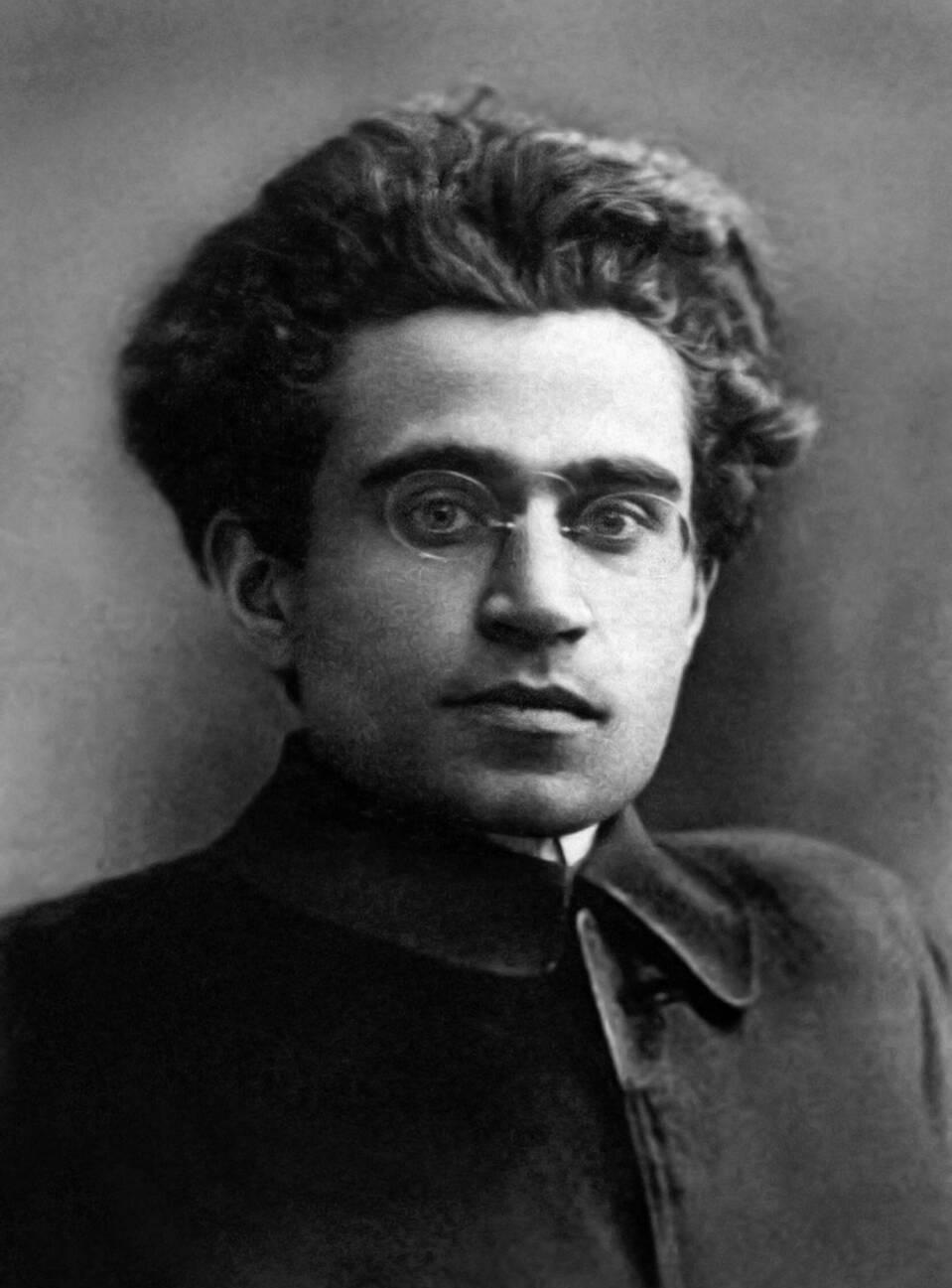
Gramsci's Hegemony and Its Contemporary Relevance
Antonio Gramsci's concept of cultural hegemony, developed in his prison notebooks written during his imprisonment by the Mussolini government between 1929 and 1935, provides the most sophisticated theoretical framework for understanding why information control is so central to the grammar of power, and why it is simultaneously so difficult to maintain in the long run.
Gramsci's insight is that political domination in modern societies is maintained not primarily through force but through the production of consent: through a process by which the dominant group manages to make its particular vision of the world, its values, its assumptions about what is natural and inevitable, appear to be common sense shared by all members of society, including those whose objective interests are not served by those assumptions. Cultural hegemony is the condition in which the dominated groups in a society actively participate in the reproduction of the order that constrains them, because they have internalised its premises as their own spontaneous values and judgments.
What makes the contemporary moment distinctive is not the existence of information manipulation, which is as old as organised political life, but the specific combination of: the collapse of the institutional authority of traditional information intermediaries; the rise of algorithmically optimised platforms that amplify engagement over truth at enormous scale; the convergence of adversary state information operations with domestic political actors who find those operations strategically useful; and the genuine epistemological difficulty that the complexity of the contemporary world poses for citizens who lack the specialist knowledge to independently evaluate many of the most important political questions they face.
The Grammar Extends
Information environments are not natural phenomena. They are constructed by actors with specific interests in shaping them. The construction is often deliberate, often professional, often well-funded, and usually invisible to the audiences whose beliefs it shapes. The first requirement for navigating the contemporary information environment is acknowledging this: not as a counsel of paranoia or nihilistic epistemological despair, but as the precondition for developing the critical habits that reliable political judgment requires.
The primary objective of sophisticated information operations is not to make the target audience believe a specific falsehood. It is to make the target audience unable to confidently believe anything. An epistemologically helpless population is a politically controllable population. The production of doubt is a more powerful instrument than the production of false certainty, because doubt is self-reinforcing: once established, it resists correction even by accurate information, because the very accuracy of the correction can be framed as evidence of its suspicious origin.
The most durable forms of power are those which the subjects no longer experience as power at all. Cultural hegemony is not maintained by propaganda alone: it is maintained by the entire ensemble of cultural institutions through which a society makes meaning. Understanding one's own information environment, recognising the institutional structures that shape it, the commercial incentives that distort it, and the adversary operations that exploit it, is the precondition for the kind of political judgment that makes democratic governance possible rather than nominal.